
digital culture
Hyper-Reality
Hyper-Reality on Vimeo was posted 9 years ago, but it feels like the not-so-distant future, like in the next 5 minutes.
6 out of 5 stars - Apple WWDC 2025
One of the best parts of the WWDC 2025 Keynote, “6 out of 5 ⭐️” by Allen Stone.
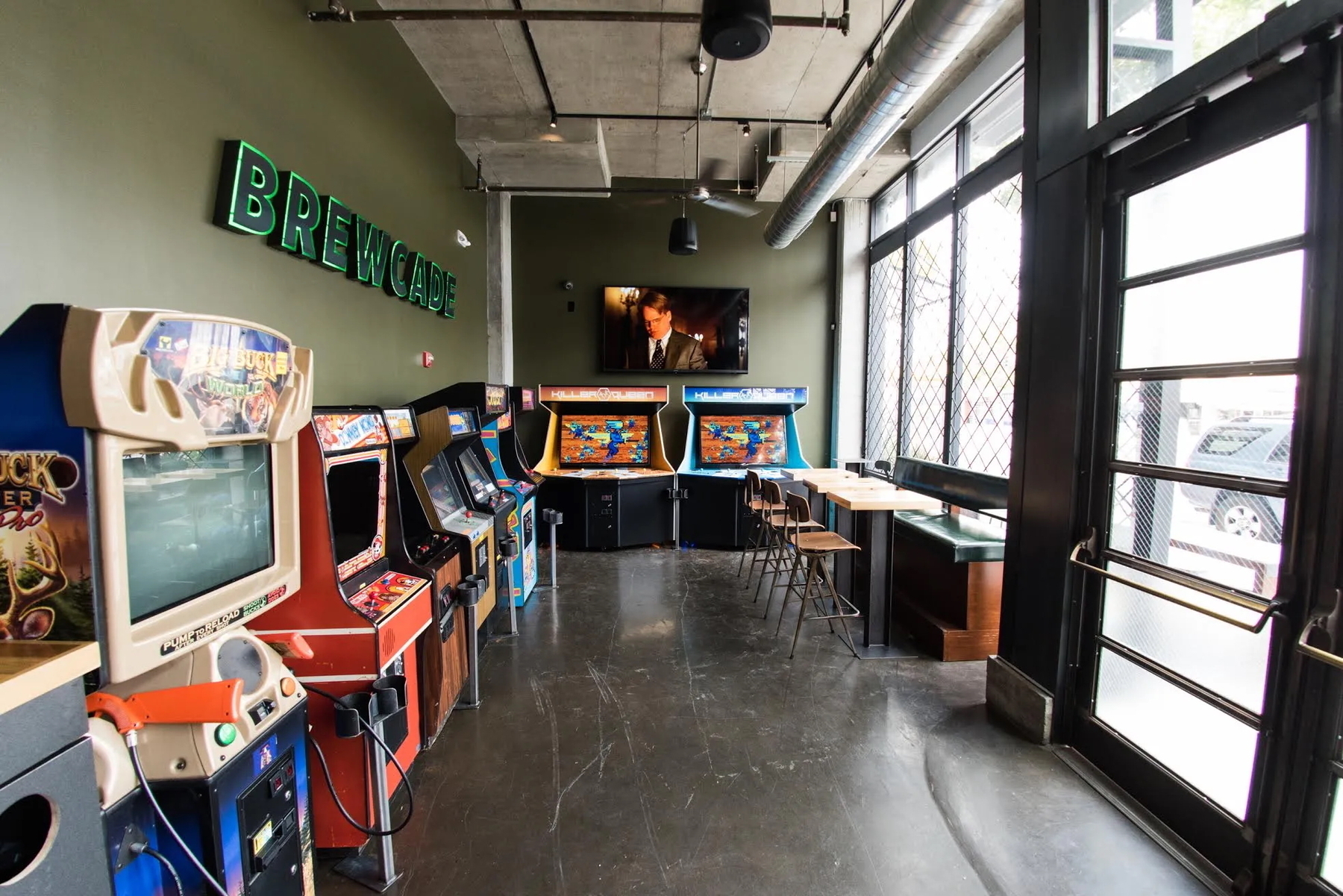
The New Video Arcades: Like A Working Museum, with Beer
Great article over at Polygon on new video game arcades: What it's Like Running an Arcade in 2015
It's a costly business, and it's no secret that many arcades have been looking for other ways to supplement that income, including combining arcades and bars together. "[Most people] have illusions that beer and arcades are a perfect gimmick," Wilson says. "If you don't love video games or know anything about repairing them or how to maintain them, you will lose your hat faster than the few minutes it takes to sign the lease on your new spot."
It’s great that they list figures for the businesses too. When you’re in one of these places it seems like the money is just pouring in, but that’s not the financial reality.
Plus, you’ll need to be really good at repairing these old machines, and in ways that retain their authenticity.
“It’s very important to have a very good video game repairman,” Horne says. “It’s very important. Probably the number one thing. And bring your patience when it comes to sourcing the games.”
Prices for the cabinets can wildly vary, on average costing around $1,000 a unit. For example, Mario Kart can run $2,500 to $3,000. Mike Tyson’s Punch-Out!! can run $1,500. Mortal Kombat 2 has doubled in price since Horne started buying machines.
(via kottke.org)
(Revised and republished April 12th, 2025)
People Working in Computer Room
As part of my dissertation I’m working with the Southern California Edison Photographs and Negatives collection at the Huntington Library. The photographic collection is now available online at the Huntington Digital Library. A few years ago, when I first came across this collection, it was only available in-person on a single computer.
I stitched the two photos below into an animated gif, showing the transition within computerized space. The images are from “People working in computer room with 1” tape drives" in the SCE collection at the Huntington. These before and after photos taken in 1966 at SCE appear to show how people would fit alongside and interact with the mainframe computer.
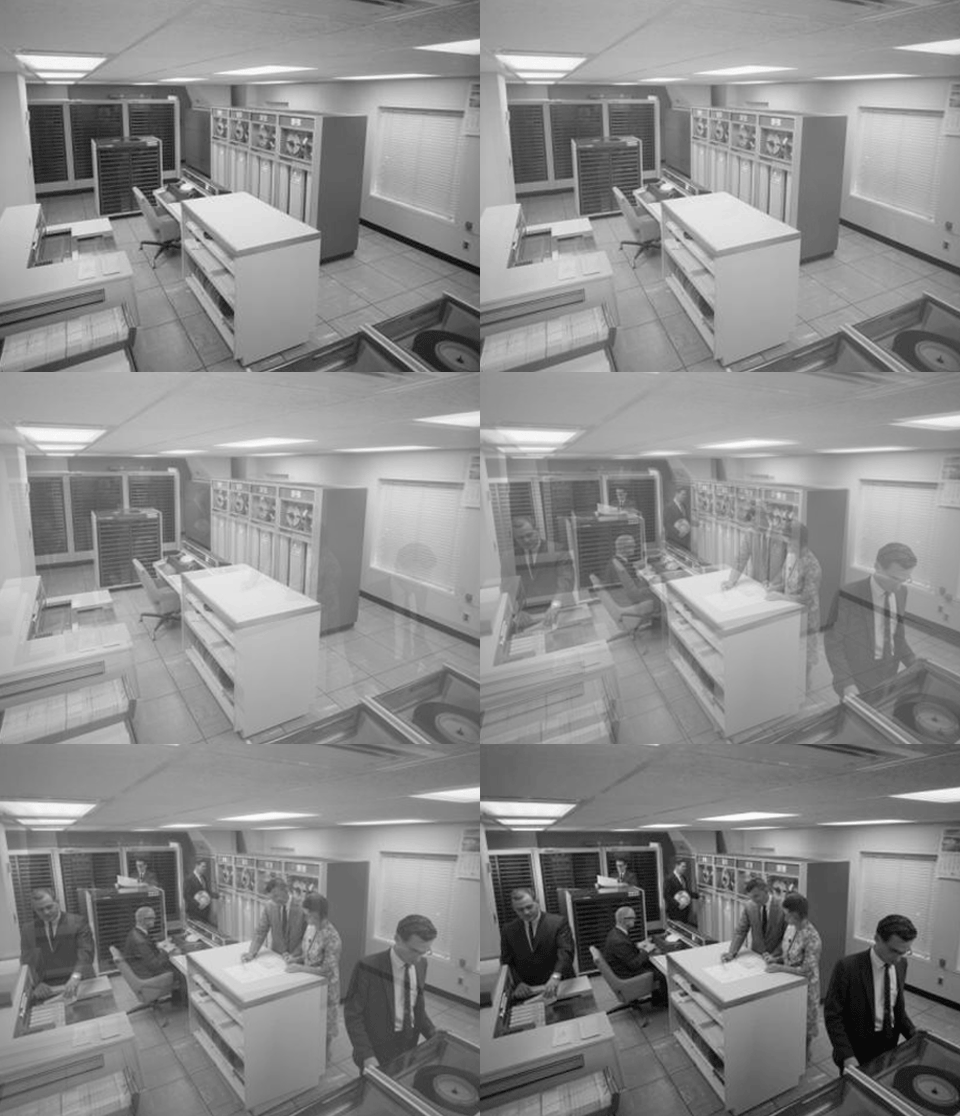
Photographs such as these often show many people in the room, mostly trying to look busy, with a few of them staring at equipment or pretending to use the machine. These staged photographs for internal use are similar to those used for marketing. In both cases the images are designed to show how people and computers would work together.
The mainframe in these photographs is a Control Data Corporation mainframe, and it appears to be a CDC 3200 system.
The Computer History Museum in Silicon Valley has a brochure for the CDC 3200 mainframe (PDF) available online as well.
(Revised and republished March 29th, 2025)
Univac 494 marketing photographs
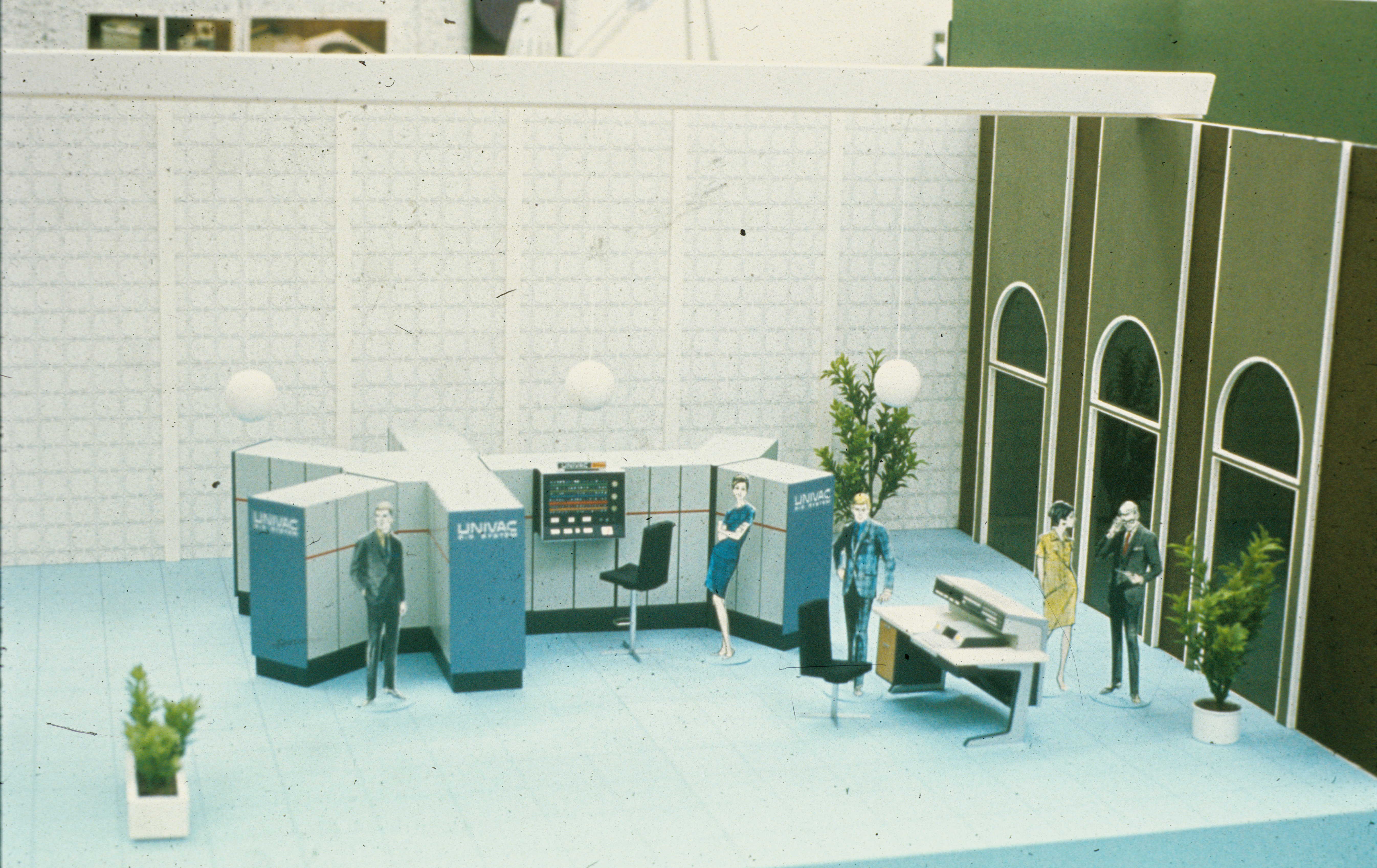
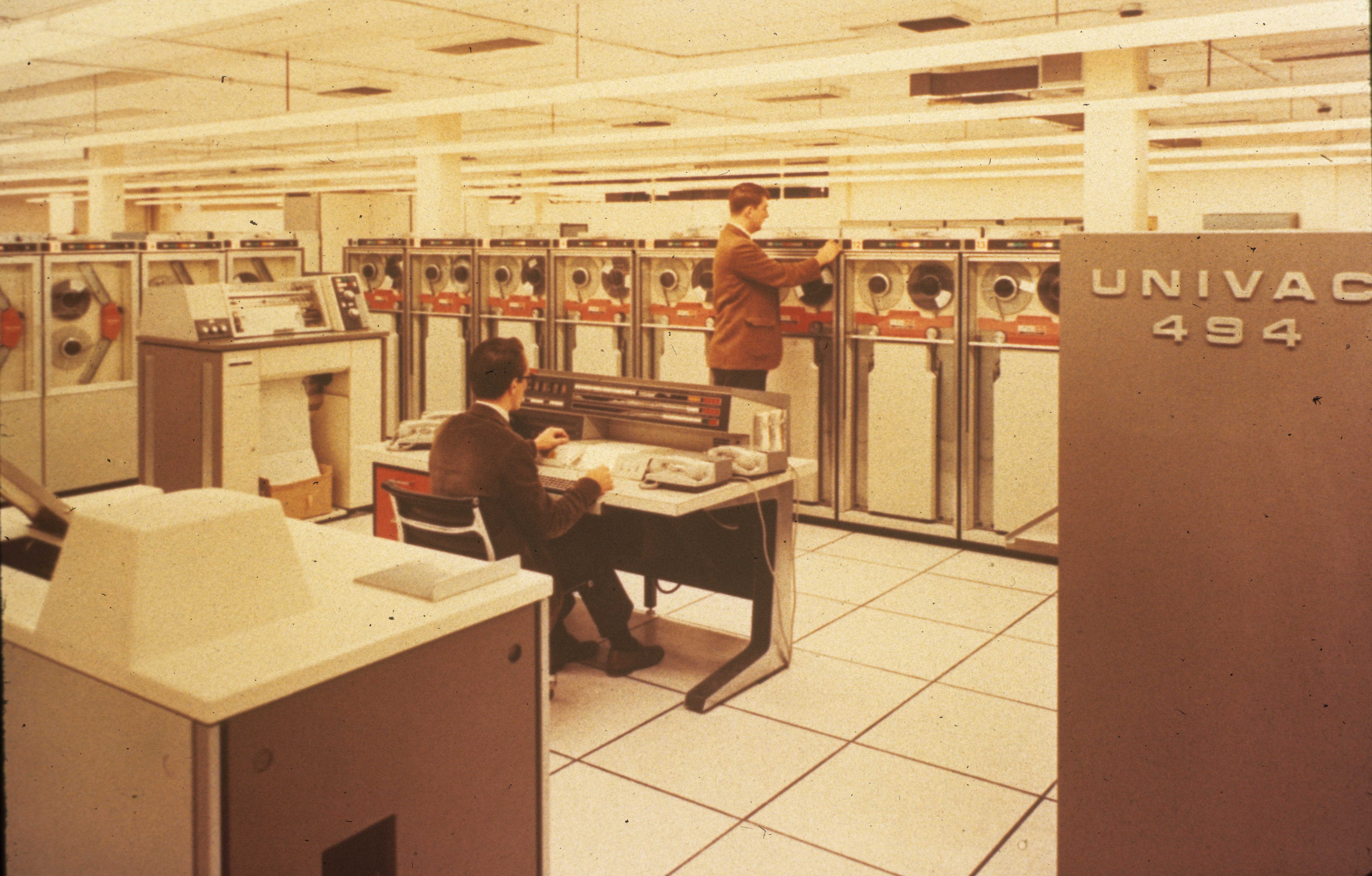
I came across this Univac photograph online, showing three people working in a computer room. Using a reverse Google Image Search, it appears that this image and a few others like it were posted online around 2006. From there it looks like the pictures were blogged here and there, recently posted to Pinterest, then making their way to Instagram. I can’t seem to find the original image online, but this one looks like a scan of a partially damaged photo most likely used for marketing. It’s possible that this image could be printed in a brochure other other advertisement.
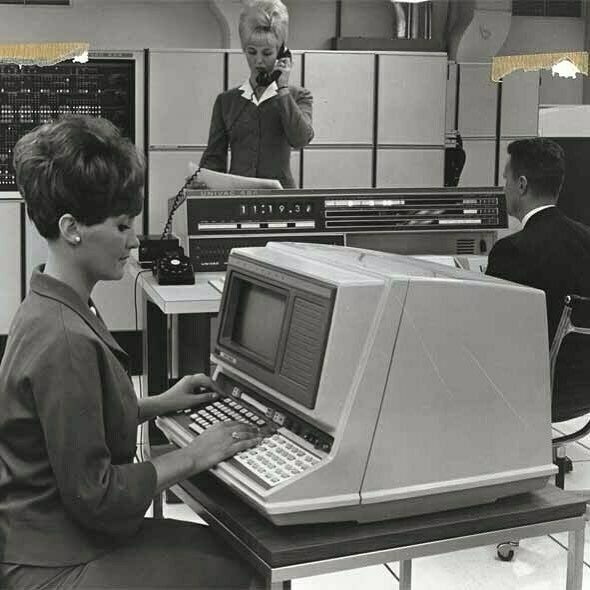
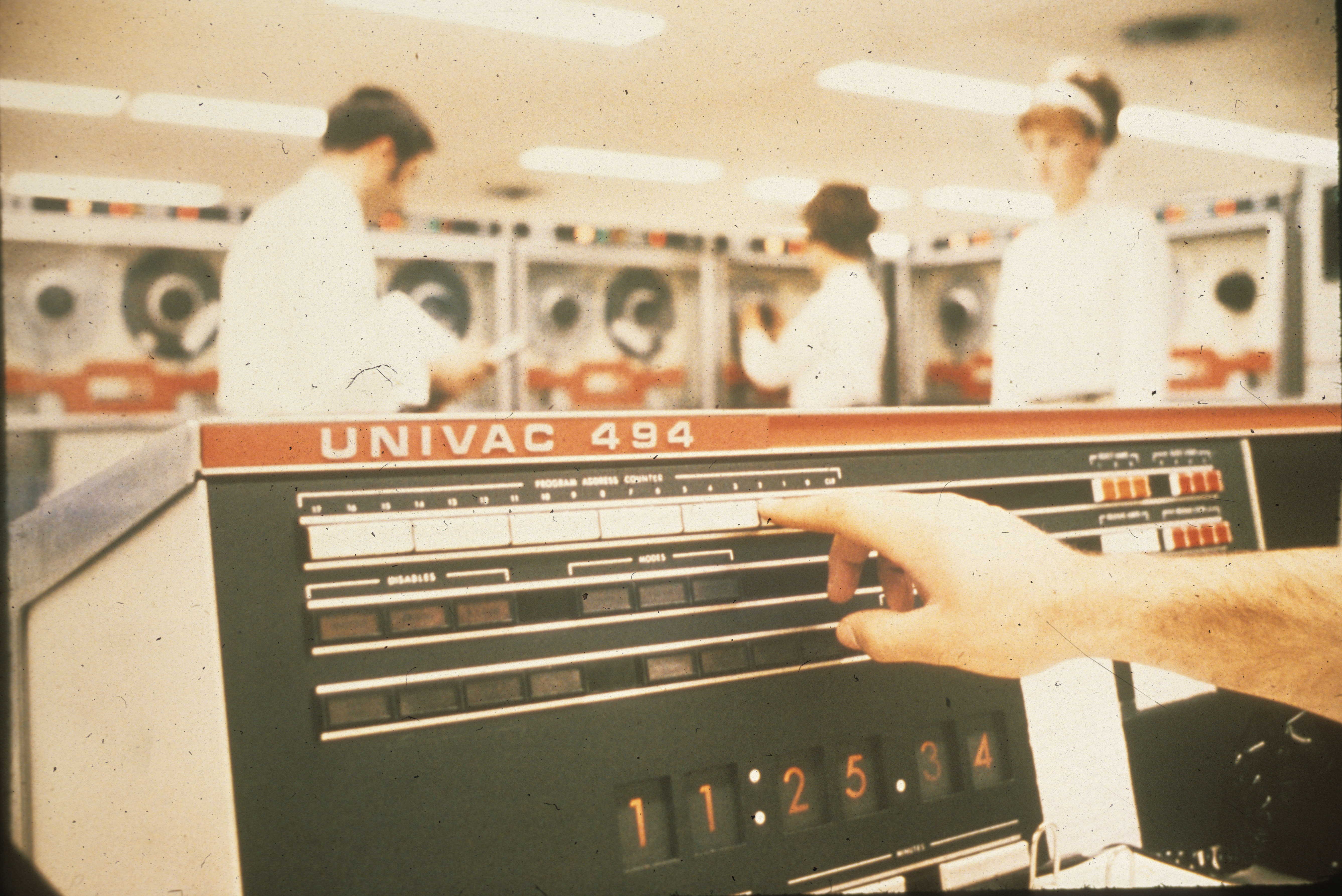
The image above is a little fuzzy, but the mainframe appears to be a Univac 494. This would date the photograph to 1965 or 1966 or so. The additional photographs below offer a closer view of the mainframe console and its peripherals. There’s also more information on the Univac 494 at Ed Thelen’s website (photos linked below).
(Revised and republished March 30th, 2025)
Amazon: The New Consumer's Bible
From November 2013, Derek Thompson writing for The Atlantic: The Amazon Mystery: What America’s Strangest Tech Company Is Really Up To (Wayback Machine link)
Seriously: What is Amazon? A retail company? A media company? A logistics machine?...
In a way, this strategy isn’t new at all. It’s ripped from the mildewed playbooks of the first national retail stores in American history. Amazon appears to be building nothing less than a global Sears, Roebuck of the 21st century—a large-scale operation that aims to dominate the future of shopping and shipping.
From October 2014, also Derek Thompson for The Atlantic: What in the World Is Amazon? (Wayback Machine link)
...there is something devilishly seductive to the conveniences of digital capitalism that makes life better for us as consumers and worse for us as workers. Does buying diapers once from Amazon make one morally complicit in the working conditions of its warehouse employees? What about subscribing to Amazon Prime? Having an Amazon credit card?
(Revised and republished April 12th, 2025)
Anything Mechanical, Give it a Good Bash
“Percussive Maintenance,” by Duncan Robson
What a great supercut. Montage videos like this are good conversation starters, and they help run a thread through seemingly disparate genres of film and history.
(Revised and republished April 12th, 2025)
Finding the Death of the Mainframe

I came across a blog post (Wayback Machine link) discussing the 50th anniversary of the IBM System/360, and it mentioned a prediction about the so-called “death of the mainframe.”
I had seen the photo before, of Stewart Alsop literally eating his words “Death to the Mainframe” with a knife and fork, but I had not seen the original quote in print, and I couldn’t find a citation.
Back issues of InfoWorld magazine are online at Google Books, but searches there were not helpful. I kept finding references to the prediction, but not the original statement itself.
Then I happened across this forum discussion about the “Death of the Mainframe” on Google Groups, and one of the members noted that the original statement did not happen in the InfoWorld magazine, but at a conference.
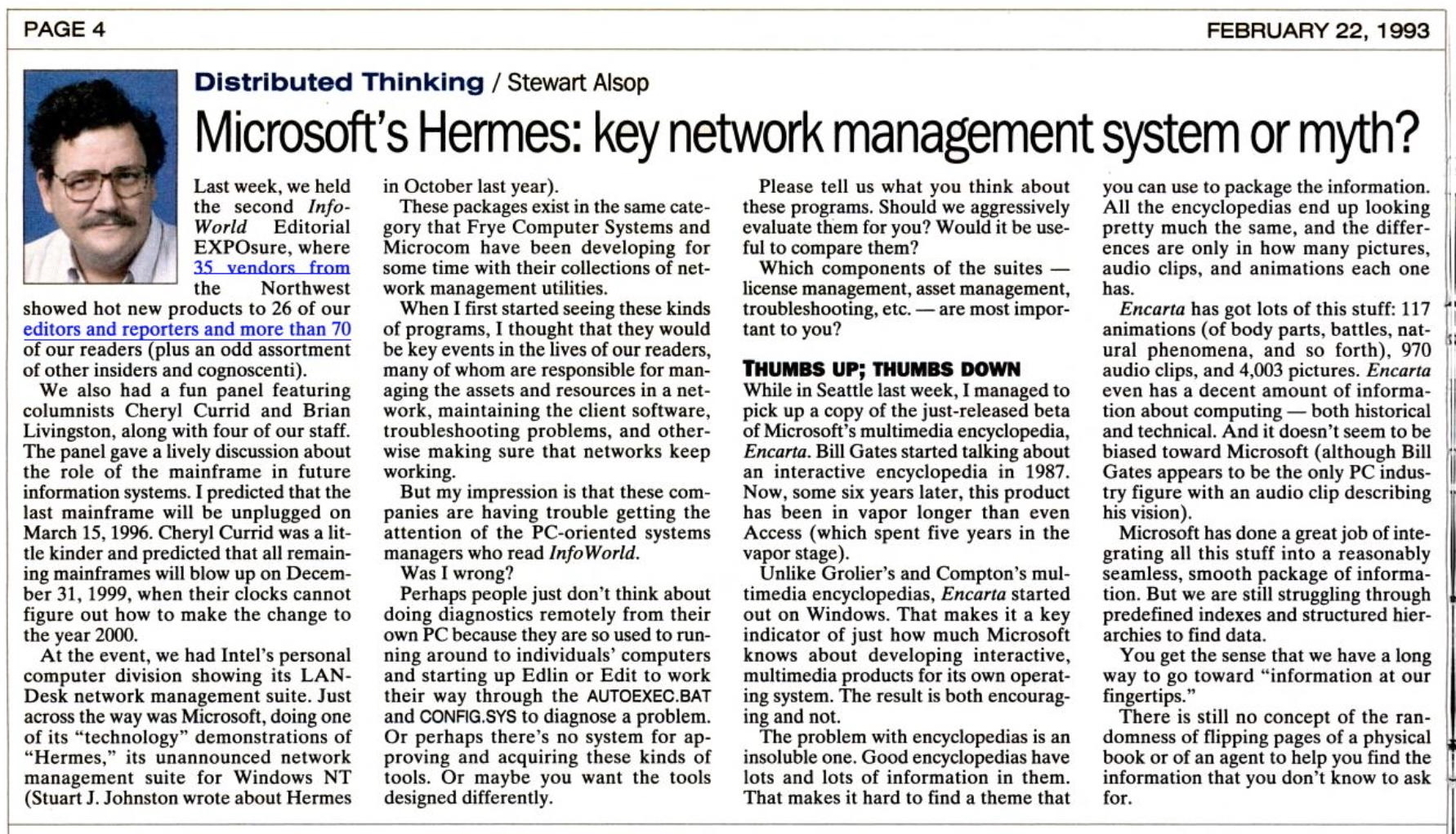
The first reference in print to the death of the mainframe by Alsop is in the February 22, 1993 issue of InfoWorld magazine on page 4. The article reads:
Last week, we held the second InfoWorld Editorial EXPOsure, where 35 vendors from the Northwest showed hot new products to 26 of our editors and reporters and more than 70 of our readers (plus an odd assortment of other insiders and cognoscenti).
We also had a fun panel featuring columnists Cheryl Currid and Brian Livingston, along with four of our staff. The panel gave a lively discussion about the role of the mainframe in future information systems. I predicted that the last mainframe will be unplugged on March 15, 1996. Cheryl Currid was a little kinder and predicted that all remaining mainframes will blow up on December 31, 1999, when their clocks cannot figure out how to make the change to the year 2000.
Reference for the magazine article:
Alsop, Stewart. “Microsoft’s Hermes: key network management system or myth?” Distributed Thinking, InfoWorld magazine. February 22, 1993. page 4. (article available on Google Books)
(Revised and republished March 30th, 2025)
We Don't See Mainframes as Legacy Technology
Half-century milestone for IBM mainframes, by Mark Ward at BBC News, April 7th, 2014.
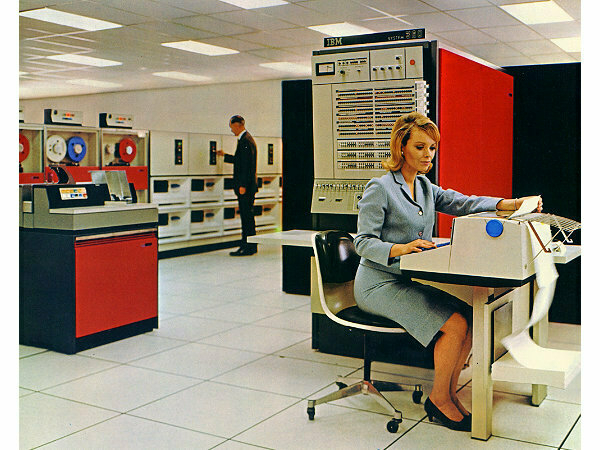
Most interesting about the passage below, is that they’re referring to mainframes right now, not 50 years ago.
"I don't think people realise how often during the day they interact with a mainframe," he said.
Mr Heptonstall said mainframes were behind many of the big information systems that keep the modern world humming and handled such things as airline reservations, cash machine withdrawals and credit card payments.
The machines were very good at doing small-scale transactions, such as adding or taking figures away from bank balances, over and over again, he said.
"We don't see mainframes as legacy technology," said Charlie Ewen, chief information officer at the Met Office, which has been using mainframes for 40 years.
(Revised and republished March 30th, 2025)
IBM System/360 - 50th anniversary
IBM recently celebrated the 50th anniversary of the System/360 mainframe, which was announced on April 7, 1964.
IBM press announcement text for the System/360, 1964 (Wayback Machine link)
IBM System/360 at the Computer History Museum
The System/360, or S/360 is discussed in this IBM video, “IBM Centennial Film: They Were There.”
youtu.be/XrhDaAmn5… (video no longer available)
Also from IBM, System 360: From Computers to Computer Systems (Wayback Machine link):
Most significantly, the S/360 ushered in an era of computer compatibility—for the first time, allowing machines across a product line to work with each other. In fact, it marked a turning point in the emerging field of information science and the understanding of complex systems. After the S/360, we no longer talked about automating particular tasks with “computers.” Now, we talked about managing complex processes through “computer systems.”
(Revised and republished April 1st, 2025)