
history
"Just a bigger roller coaster"
CHM Live | Apple at 50: Five Decades of Thinking Different
(1:14:10, Avie Tevanian) A couple days before Christmas (1996), we signed the deal, to be purchased by Apple. And we thought this was great, 'cause NeXT was a total roller coaster ride, ups and downs like crazy, and now we've got the power of Apple behind us, we're gonna get our software out there, we're gonna rebuild the company, fix it all. (Chris Espinosa) It was just a bigger roller coaster, Avie.
(1:20:48, Avie Tevanian) And it wasn't even just the technology, it was dealing with the people, that was the hardest part.
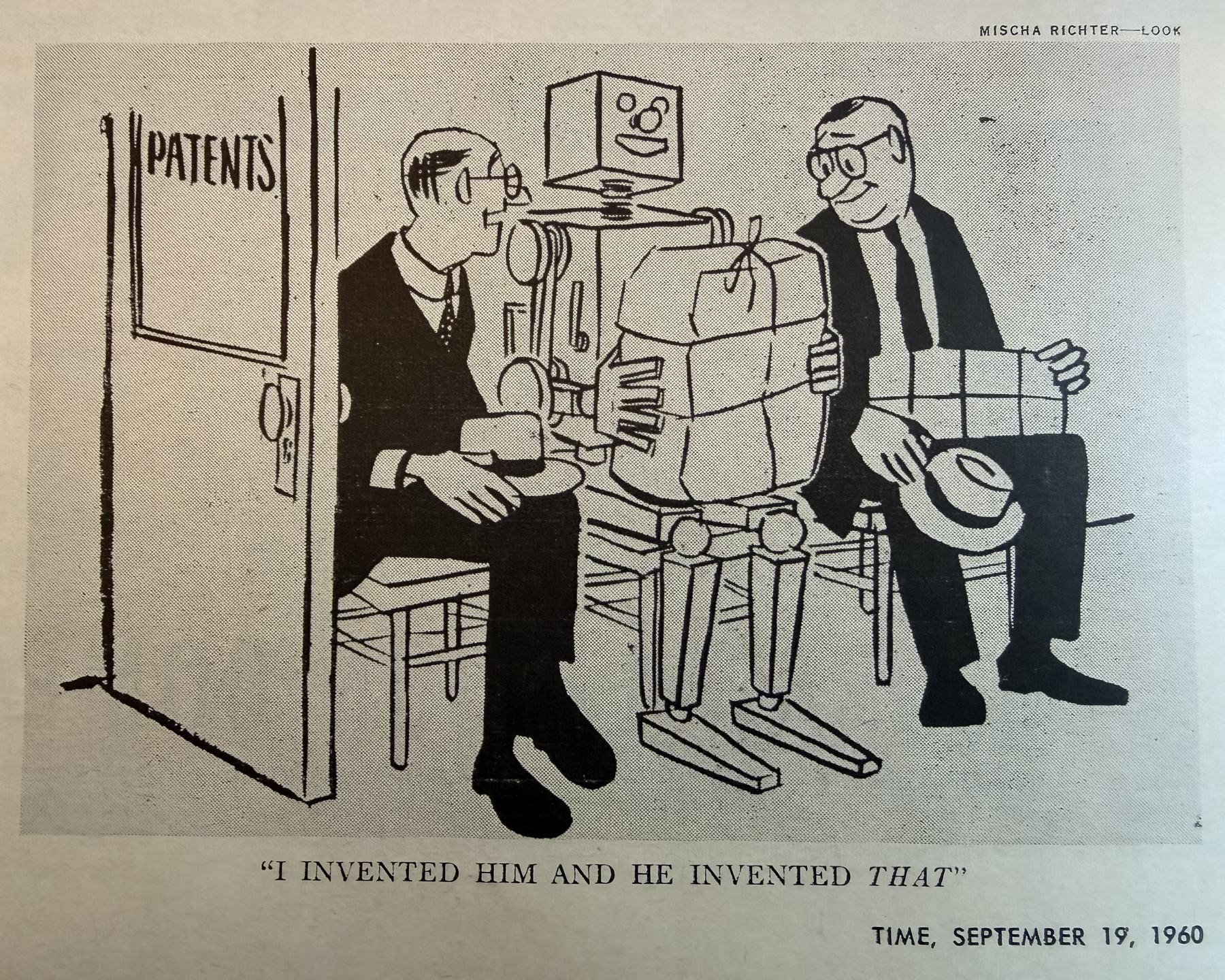
"Roberta" in robot costume, 1966
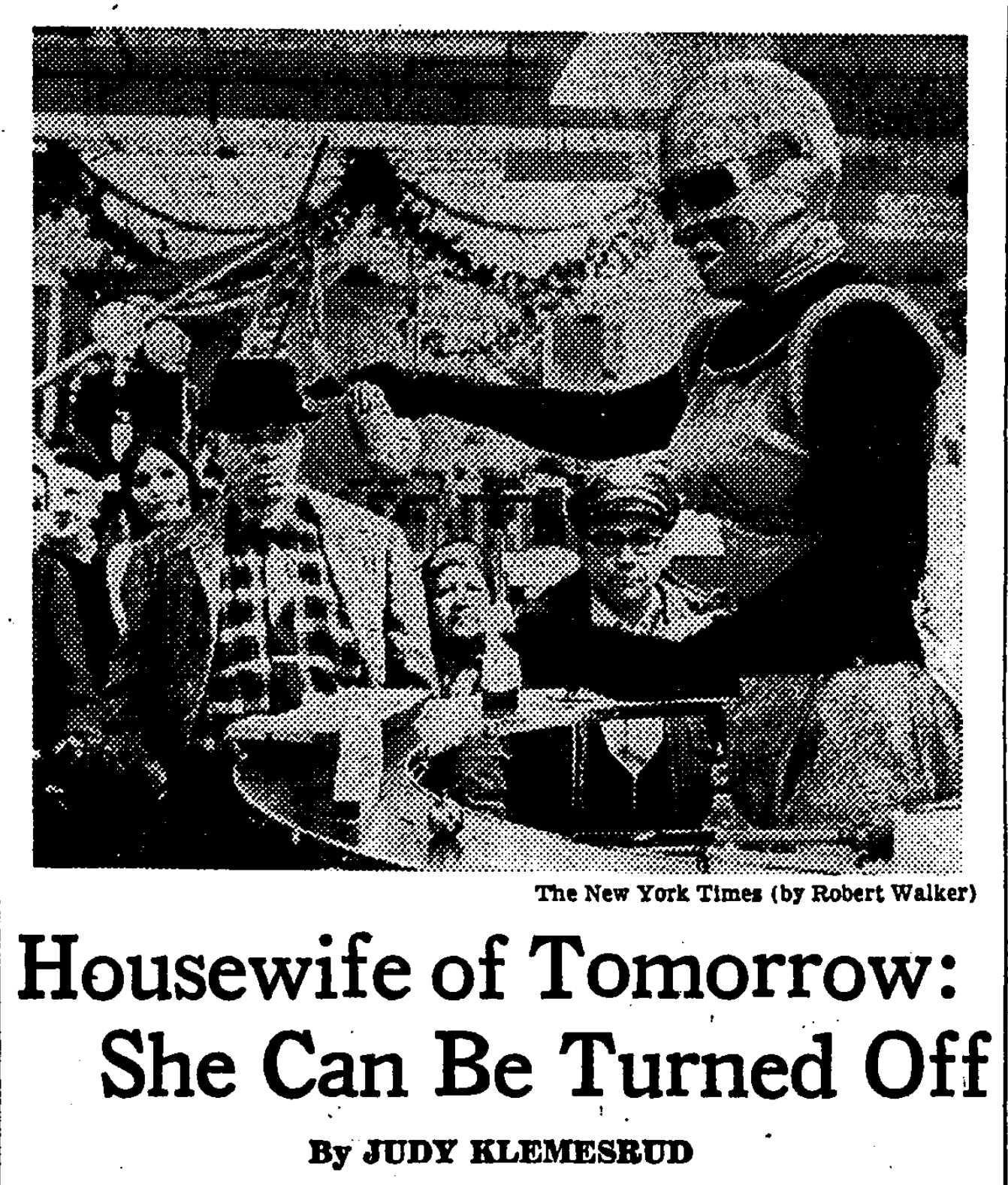
In 1966, “Roberta,” also known as “the housewife of tomorrow,” appeared at Macy’s in New York to demonstrate Hamilton Beach appliances.1
The New York Times article, noting that “she can be turned on and off at will,” also highlighted a divide between men and women viewing the robotic spectacle.
When women see Roberta perform at Macy's, their usual comment is "harumph." Men, on the other hand, often express a desire to take her home.
-
Klemesrud, Judy. “Housewife of Tomorrow: She Can Be Turned Off,” The New York Times, November 17, 1966. ↩︎
More robot costumes, but in 1968
Speaking of people in robot costumes, this British Pathé video shows “Miss Honeywell” in 1968. (via Paleofuture)
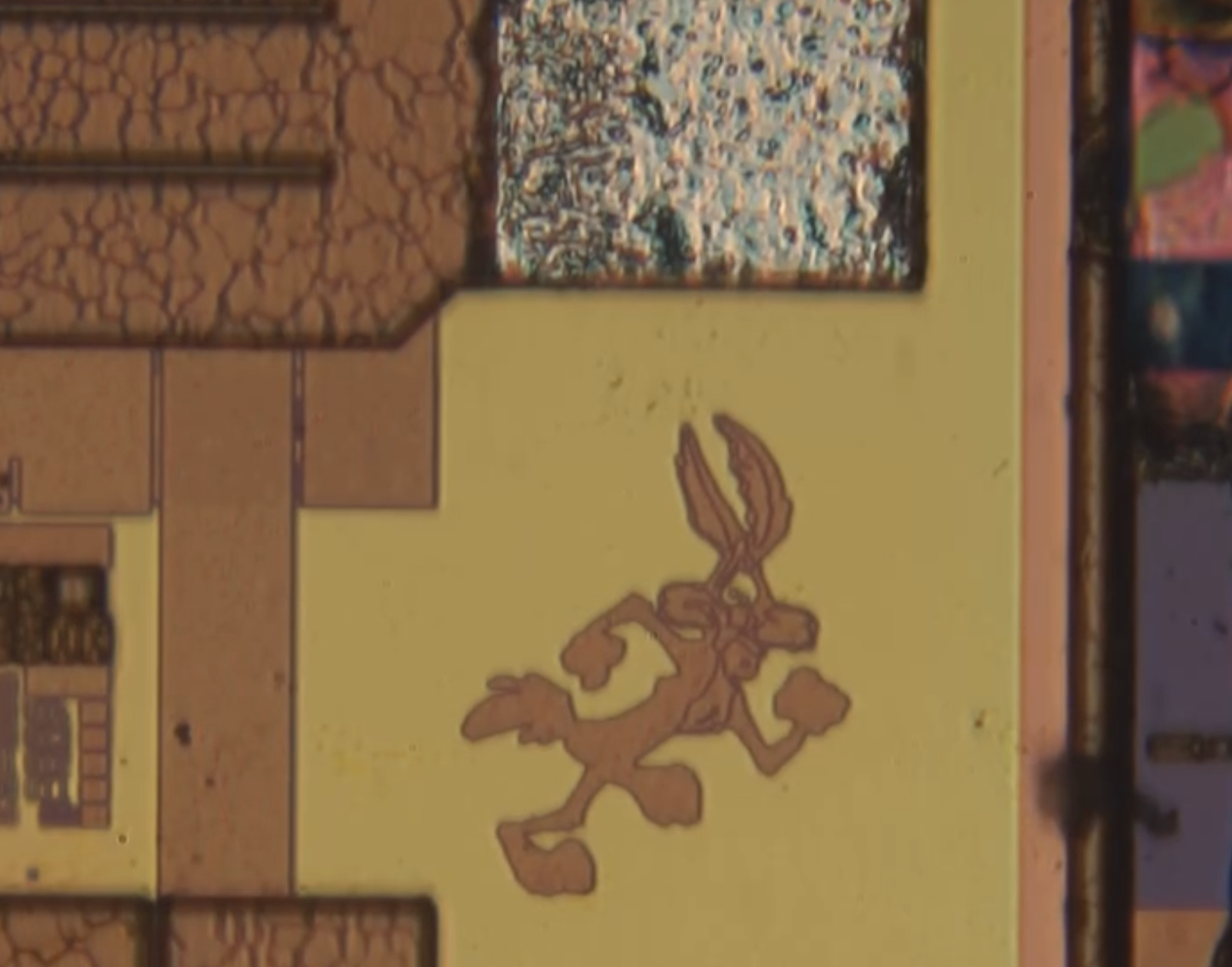
Silicon E. Coyote
I came across this post at kottke.org, Silicon Doodles & Microchip Art. It’s quite the meeting of analog and digital!
The Wile E. Coyote image caught my eye, especially in reference to my previous post, Coyote Time and Empathetic Design.
References from the kottke.org link above:
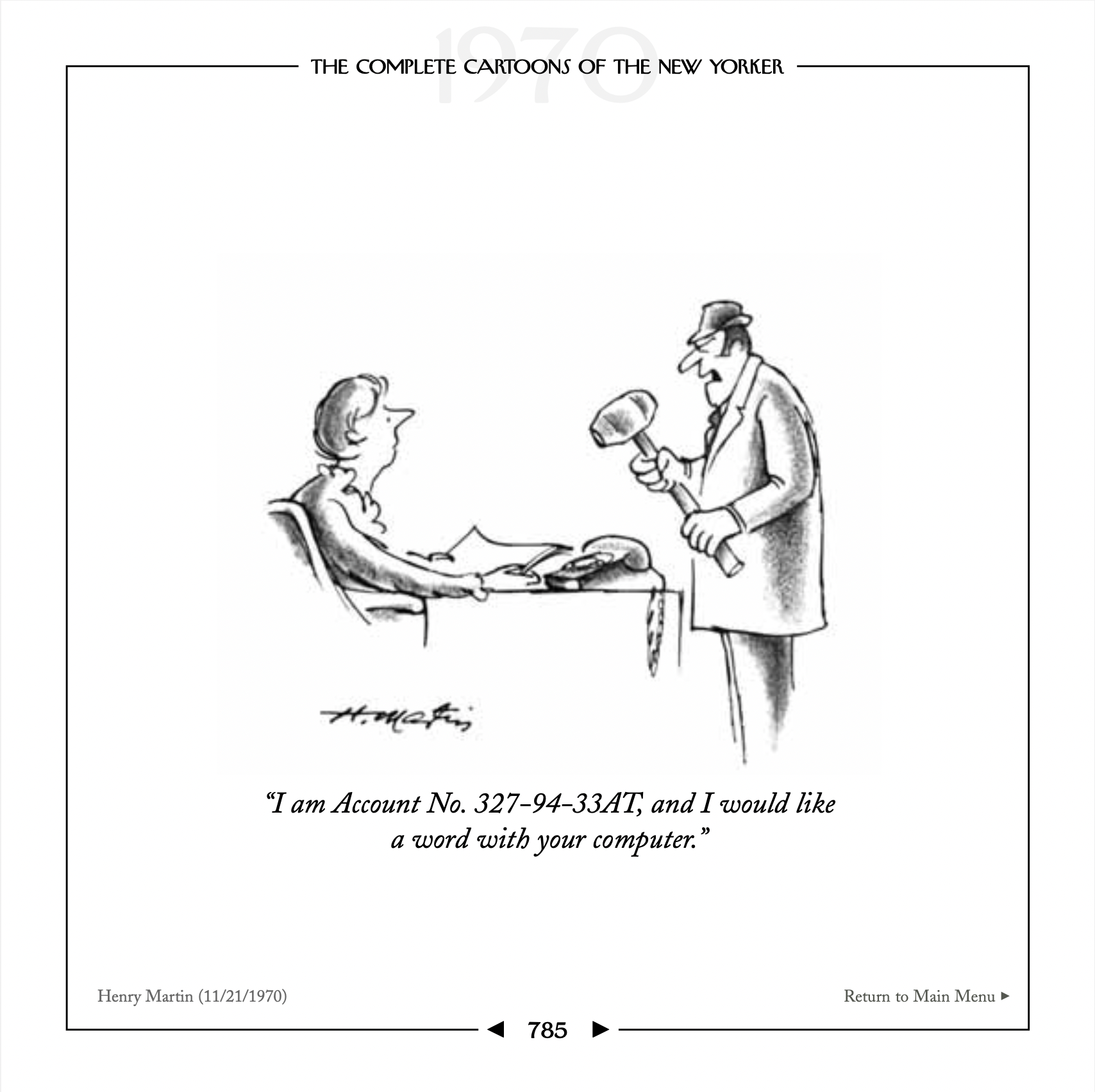
I am Account Number
Frustration with computers may be familiar to us now, but in the late 1960s and early 1970s it had already reached a new level.
The general public was aware that computers, or “mainframes,” were impacting their lives, but they had little recourse and no access to their own information within computerized systems. Which isn’t far removed from the present, actually, considering search engines, social media, and AI.
It’s interesting that the man wielding the sledgehammer doesn’t give his name – he’s simply a number in the eyes of the computer.1
-
Cartoon by Henry Martin, The New Yorker, November 11, 1970. Listed in The Complete Cartoons of The New Yorker, by Robert Mankoff and David Remnick, 2004. ↩︎
Shudder at "AI" in 1964
Many researchers shudder at the phrase “artificial intelligence.” Its anthropomorphic overtones, they say, often arouse irrelevant emotional responses – i.e., in people who think it sacrilegious to try to imitate the brain.1


-
Gilbert Burck, “Will the Computer Outwit Man?”, The Boundless Age of the Computer, Part VI, Fortune, Vol. LXX, No. 4, October 1964. Quote in footnote on page 120. Cartoon on page 121 by Nicholas Solovioff. ↩︎
Coyote Time and Empathetic Design
“Failure is a path, not an immediate result.”1
I was listening to ATP podcast, and John Siracusa discussed “Coyote Time.”
The idea of Coyote Time comes from Wile E. Coyote cartoons, and it’s rooted in video game design.
In the Wile E. Coyote and the Road Runner cartoons, Wile E. Coyote tends to end up just off the edge of a cliff, but he doesn’t fall until he realizes his dire situation.
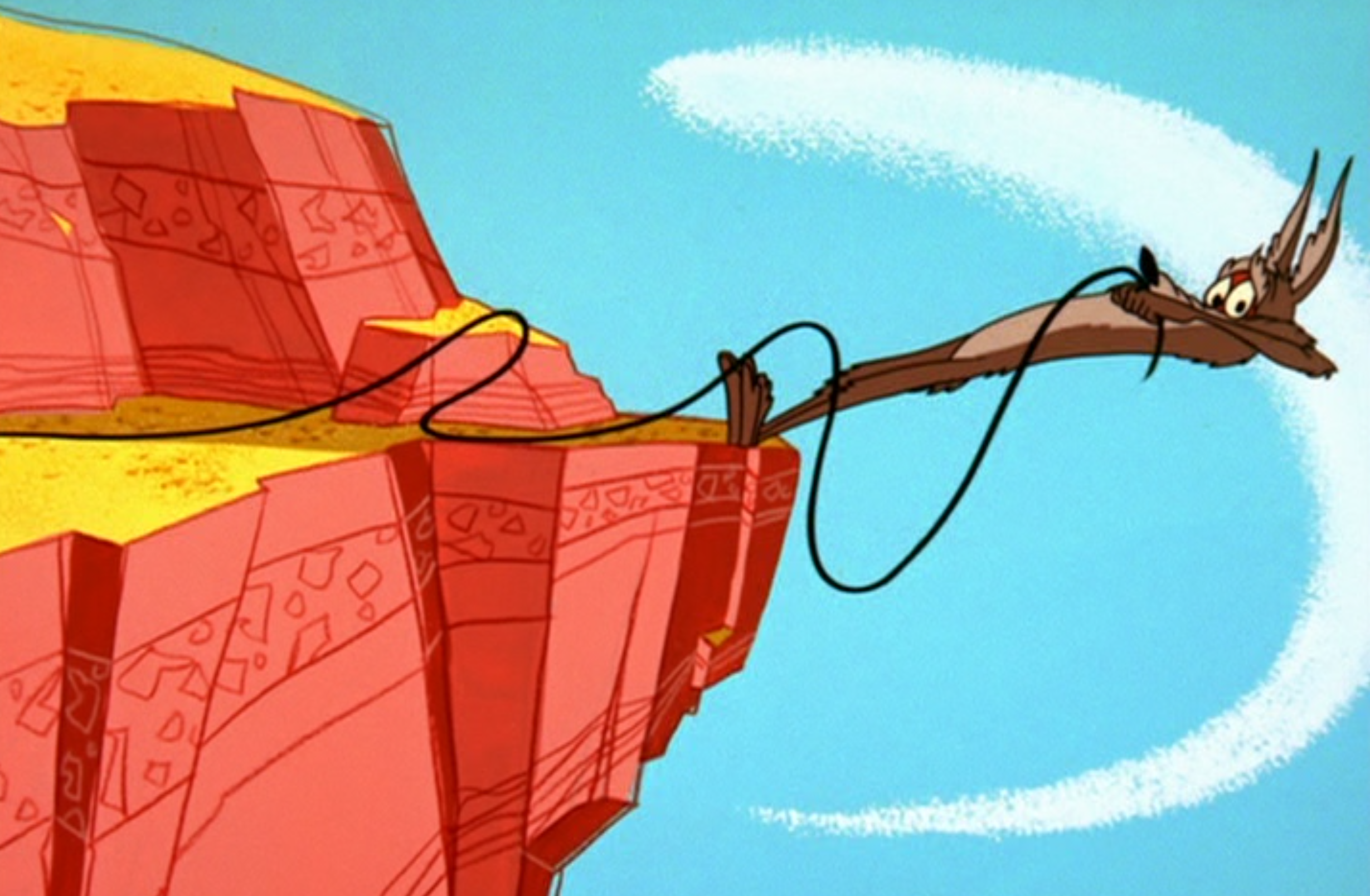
At a glance, it would appear that Coyote Time is a moment of realization, a sinking feeling of impending doom. However, in video game design, Coyote Time is more about forgiveness and empathetic design choices. Coyote Time is about designing features into a game that provide a sense of reality apart from the harsh mechanics of the game itself.
In, “Coyote Time: What Games can Teach Us About Forgiveness in Learning,” Eva Grouling Snider describes Coyote Time as providing “wiggle room” and reducing frustration, which helps to “minimize the consequences of errors, mistakes, and imperfections.”
In educational design and video game design, Coyote Time can be relied on for applying both reality and unreality, a sense of authenticity or inauthenticity, with the end goal of providing engaging experiences where the student, or player, is able to perform at their best.
For example, in video games, this is often a bit of lag introduced purposefully to enable the player to perform an action, such as jumping over a difficult object. In teaching, this could be a low-stakes formative assessment, or perhaps a quiz that can be taken multiple times but only saving the highest score. In lower division courses, Coyote Time may be increased, and then gradually designed out of the course for upper division or graduate level work.
In teaching, Coyote Time can be explicit, for example, allowing drafts to be submitted for comments prior to the formal essay. Coyote Time can also be implicit, in that it’s designed into the course and woven through the educational pathways, providing layers of support while not necessarily stating the design choices.
-
Eva Grouling Snider, “Coyote Time: What Games can Teach Us About Forgiveness in Learning,” The Teaching Innovation Blog, Ball State University, Muncie, Indiana, November 15, 2023. ↩︎
A Computer is Quite Dead
Man and Computer: A Perspective, IBM, 1967 (Computer History Museum).
“In studying the principals, the first point is that a computer is quite dead. It can do nothing without someone to give instructions.” (4:05)
“But computers have no originality, no initiative.” (19:15)
Mop and pail
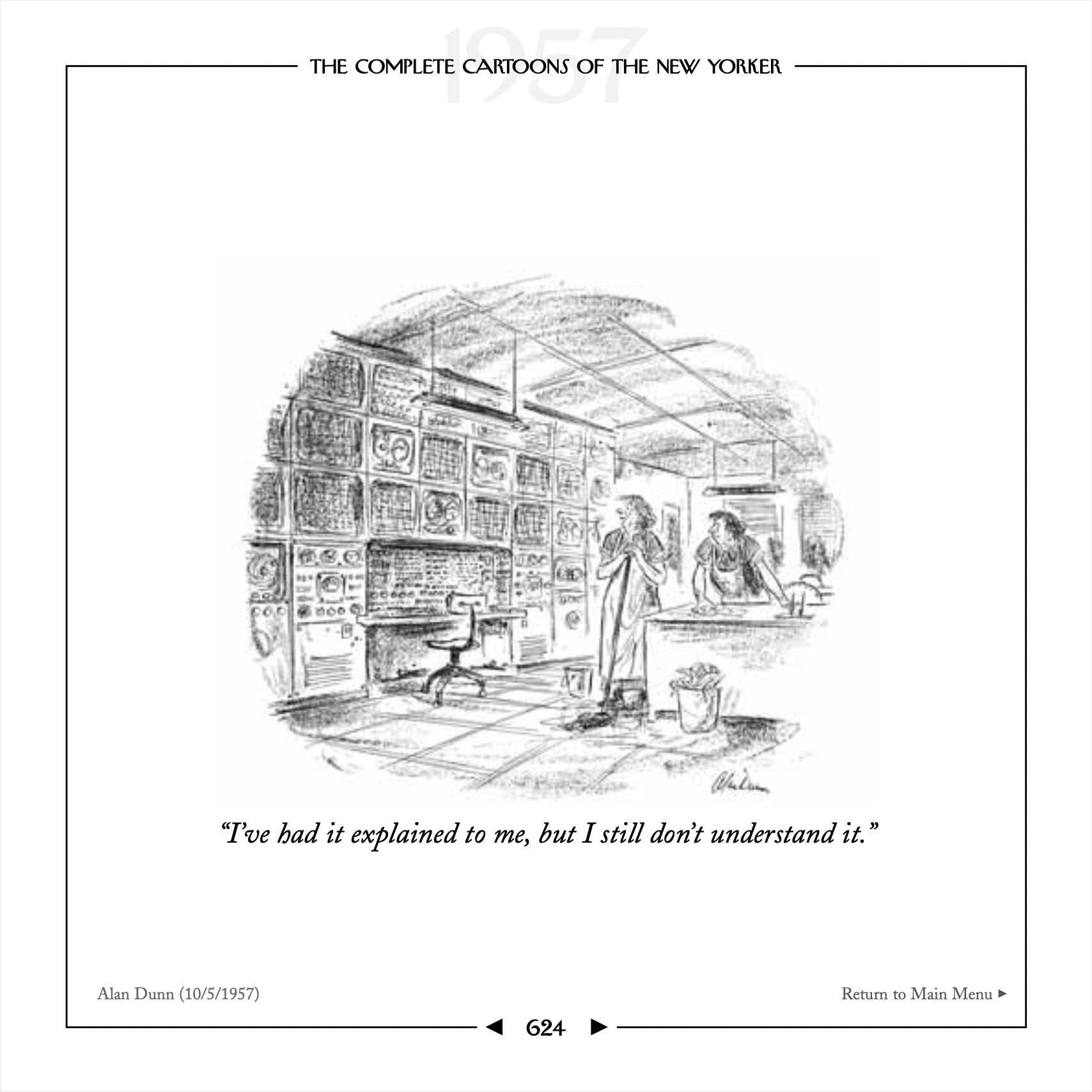
The “mop and pail” in the computer room were a constant theme for mainframes in the late 1950s and 1960s. In this cartoon the “it” is unclear, which is part of the humor. Is the “it” referencing computing in general, the fixation of people with computers, or an attempt to converse with the machine, or other possibilities?1
-
Cartoon by Alan Dunn, The New Yorker, October 5, 1957. Listed in The Complete Cartoons of The New Yorker, by Robert Mankoff and David Remnick, 2004. ↩︎