
history
Sea Monsters and Submarine Cables
Vintage-style map of submarine cables by TeleGeography (Wayback Machine link).
This year’s map pays tribute to the pioneering mapmakers of the Age of Discovery, incorporating elements of medieval and renaissance cartography. In addition to serving as navigational aids, maps from this era were highly sought-after works of art, often adorned with fanciful illustrations of real and imagined dangers at sea. Such embellishments largely disappeared in the early 1600s, pushing modern map design into a purely functional direction.
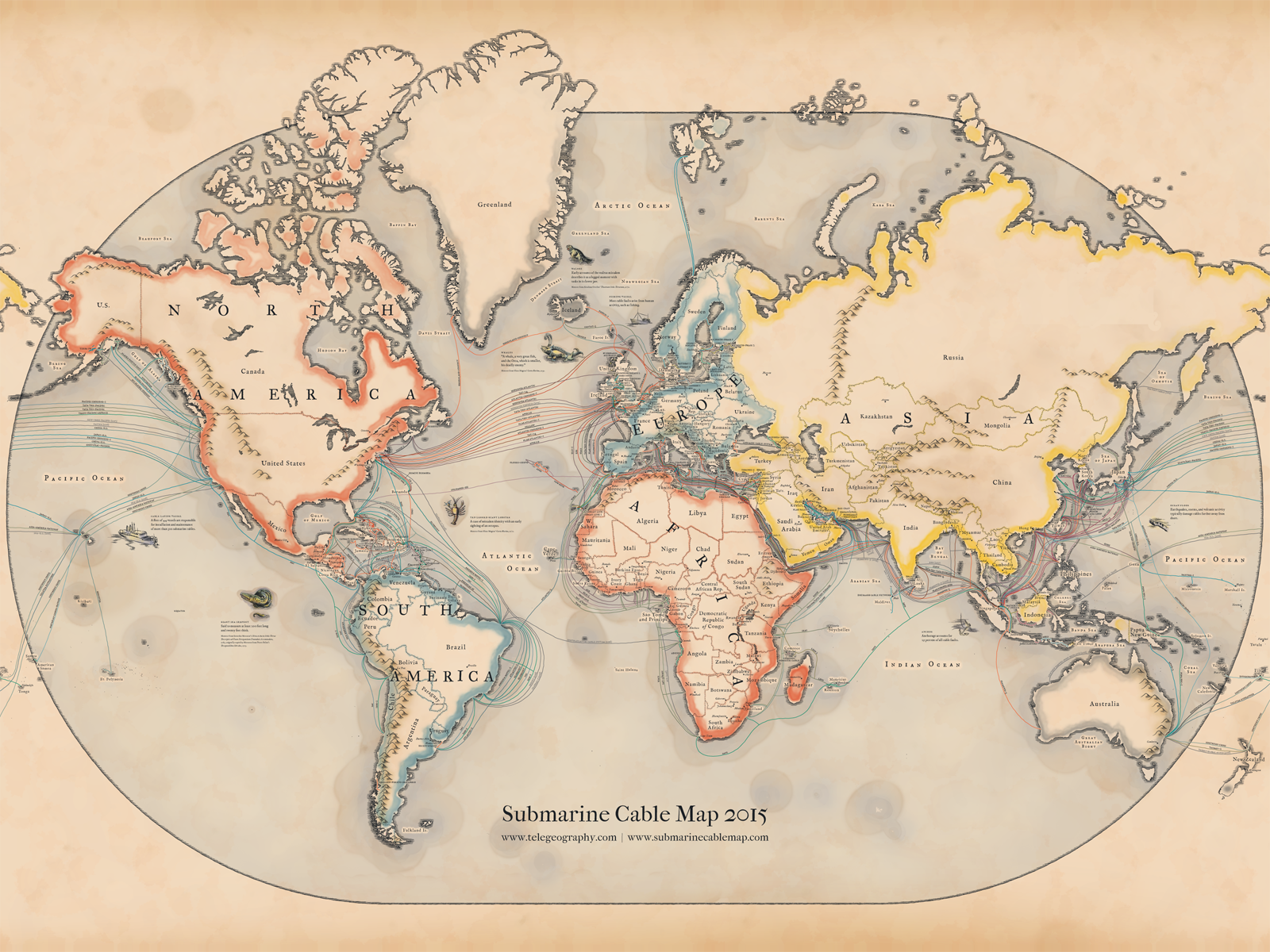
To bring back the lost aesthetic that vanished along with these whimsical details, TeleGeography referenced a variety of resources in the design process. One of the most invaluable was Chet Van Duzer’s Sea Monsters in Medieval and Renaissance Maps book, which provides arguably the most complete history of the evolution of sea monsters and map design from this period. Our final product is a view of the global submarine cable network seen through the lens of a bygone era.
There's an interactive online version of the map as well:
http://submarine-cable-map-2015.telegeography.com
(via Vox)
(Revised and republished April 12th, 2025)
We Don't See Mainframes as Legacy Technology
Half-century milestone for IBM mainframes, by Mark Ward at BBC News, April 7th, 2014.
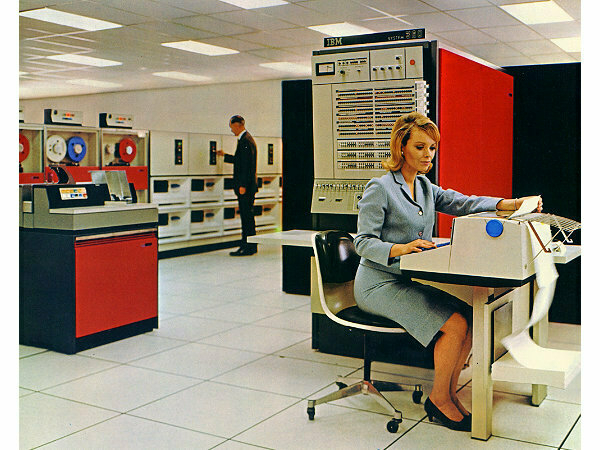
Most interesting about the passage below, is that they’re referring to mainframes right now, not 50 years ago.
"I don't think people realise how often during the day they interact with a mainframe," he said.
Mr Heptonstall said mainframes were behind many of the big information systems that keep the modern world humming and handled such things as airline reservations, cash machine withdrawals and credit card payments.
The machines were very good at doing small-scale transactions, such as adding or taking figures away from bank balances, over and over again, he said.
"We don't see mainframes as legacy technology," said Charlie Ewen, chief information officer at the Met Office, which has been using mainframes for 40 years.
(Revised and republished March 30th, 2025)
IBM System/360 - 50th anniversary
IBM recently celebrated the 50th anniversary of the System/360 mainframe, which was announced on April 7, 1964.
IBM press announcement text for the System/360, 1964 (Wayback Machine link)
IBM System/360 at the Computer History Museum
The System/360, or S/360 is discussed in this IBM video, “IBM Centennial Film: They Were There.”
youtu.be/XrhDaAmn5… (video no longer available)
Also from IBM, System 360: From Computers to Computer Systems (Wayback Machine link):
Most significantly, the S/360 ushered in an era of computer compatibility—for the first time, allowing machines across a product line to work with each other. In fact, it marked a turning point in the emerging field of information science and the understanding of complex systems. After the S/360, we no longer talked about automating particular tasks with “computers.” Now, we talked about managing complex processes through “computer systems.”
(Revised and republished April 1st, 2025)
Grace Hopper documentary - "The Queen of Code"
The Queen of Code at FiveThirtyEight (Wayback Machine link)
(YouTube video no longer available)
Also, an interview with the director of the short film at NPR, on All Tech Considered: Grace Hopper, ‘The Queen Of Code,’ Would Have Hated That Title
The moth, or first computer “bug” mentioned in the video and audio above.
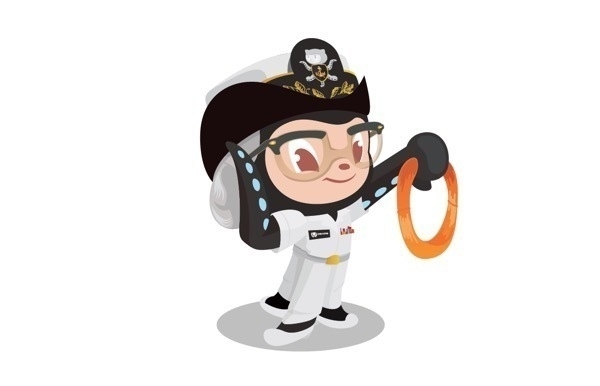
There’s also a Grace Hopper GitHub sticker (shown below) called the “Gracehoptocat.” The sticker was given out at the Grace Hopper Celebration of Women in Computing (Wayback Machine link).
(Revised and republished April 1st, 2025)
Creating Digital Professionals
BBC gives children mini-computers in Make it Digital scheme, by Jane Wakefield at BBC News, 2015:
The initiative is part of a wider push to increase digital skills among young people and help to fill the digital skills gap. The UK is facing a significant skills shortage, with 1.4 million "digital professionals" estimated to be needed over the next five years.
Interesting controversy too:
The BBC Micro, launched in the 1980s, played a big role in making computing mainstream but it was not without controversy. The broadcaster's decision to link up with Acorn Computers angered Sir Clive Sinclair as he prepared to launch a rival machine, the ZX Spectrum.
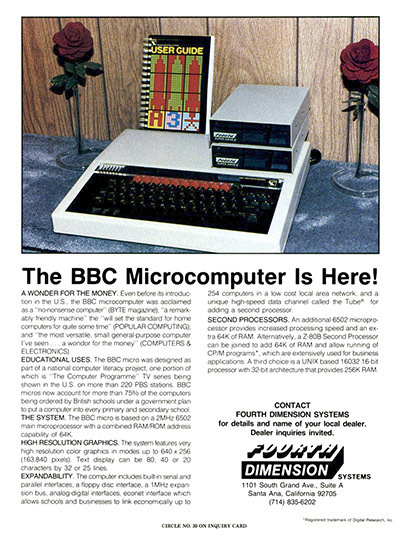
Below, a 1983 advertisement in Interface Age magazine, "The BBC Microcomputer is here!" (via Wikipedia)
(Revised and republished April 23rd, 2025)
Just a Little Acronym We Thought Up
xkcd comic on Douglas Engelbart and the "Mother of All Demos" in 1968
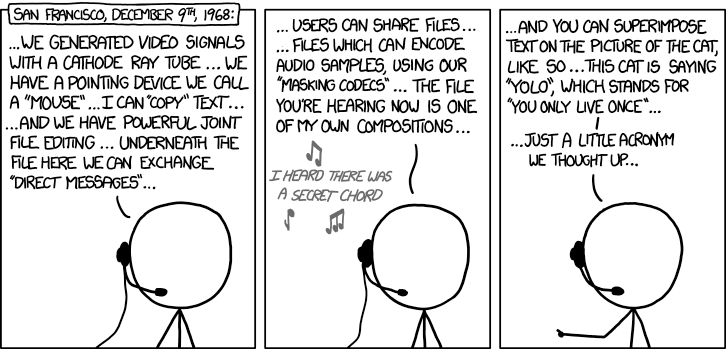
The video below is the “Mother of All Demos” at the Internet Archive
1968 Demo - FJCC Conference Presentation Reel #1 by SRI International
(Revised and republished April 2nd, 2025)
5 MB of Data on 62,500 Punched Cards
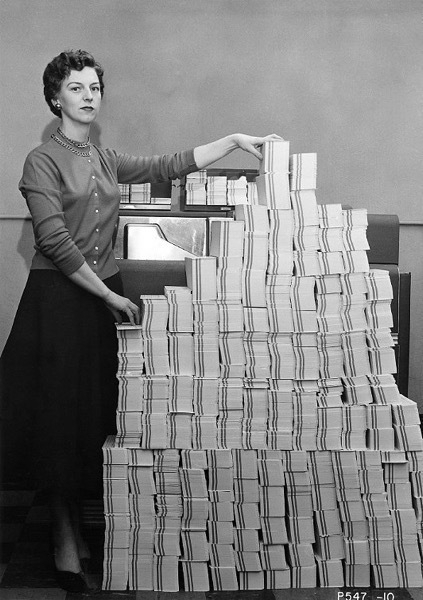
“Programmer standing beside punched cards” “This stack of 62,500 punched cards — 5 MB worth — held the control program for the giant SAGE military computer network.” ca. 1955 (via the Computer History Museum)
Explaining data storage in a visual way has always been difficult, but especially so with the transition to magnetic tape in the 1950s and 1960s.
Photographs of punched cards help show the enormity of the task at hand, and also the materiality of the information.
5 megabytes of data seems pretty insignificant nowadays, when terabyte hard drives are a common feature in personal computers.
1 TB = 1,000,000 MB (now that would be a lot of punched cards!)
From the Computer History Museum’s online exhibit on Memory and Storage.
(Revised and republished April 2nd, 2025)
Punch Card Jam Needs Some Force
In 2010, representatives from the Computer History Museum visited a company in Texas still using an IBM 402 mainframe for everyday accounting jobs: http://ibm–1401.info/402.html
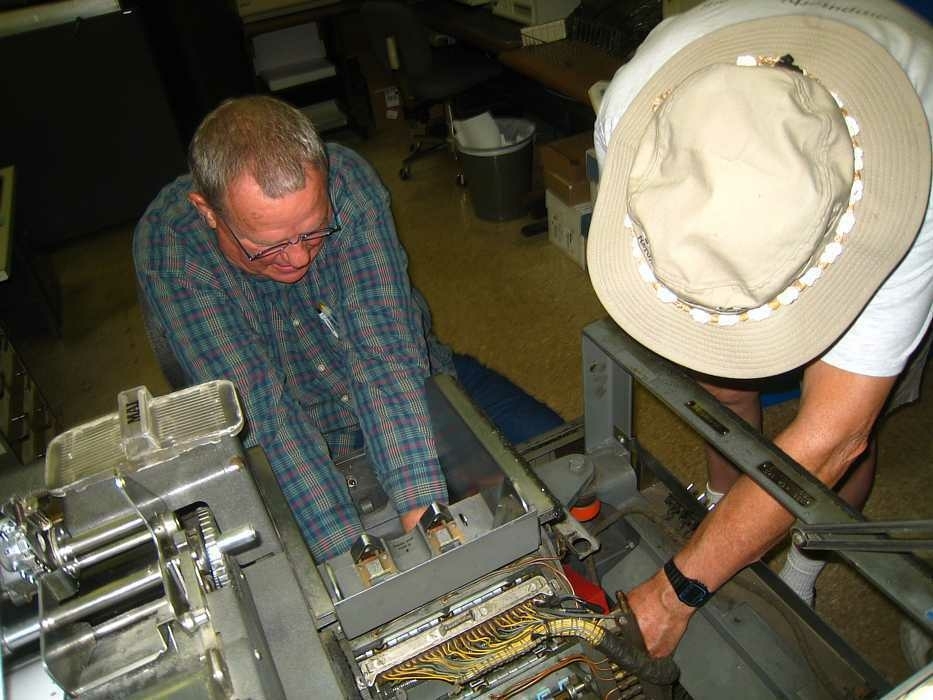
“Jam needs SOME force”
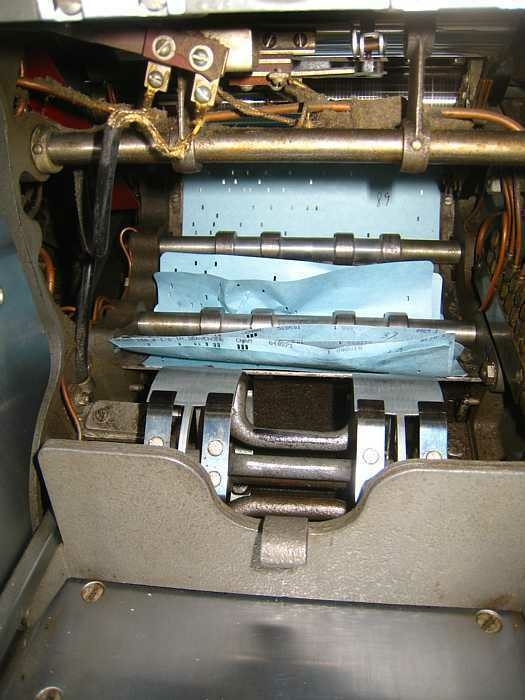
“Card Jam Front View”
The article below mentions the CHM trip to Texas, and a few other old computers still in use:
If It Ain’t Broke, Don’t Fix It: Ancient Computers in Use Today, by Benj Edwards at PCWorld, 2012 (Internet Archive: Wayback Machine)
The biggest problem with maintaining such ancient computer systems is that the original technicians who knew how to configure and maintain them have long since retired or passed away, so no one is left with the knowledge required to fix them if they break.
(Revised and republished April 2nd, 2025)
Mainframes are so 50 years ago
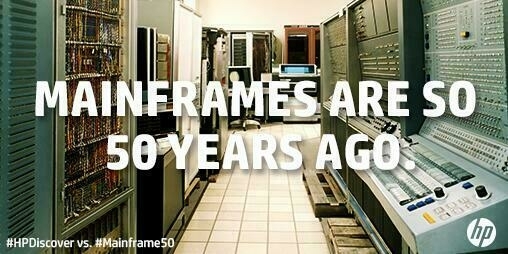
I came across this tweet as an advertisement in my own Twitter feed. It’s meant to be ironic, mainframes are still around, it’s more so the way they’re perceived that’s changed.
twitter.com/hpdiscover/status/453556126043615232 (Twitter links no longer available)
The comments are funny too:
@HPDiscover
this is SO not true. Shame on you HP.
#bigdata
— Camila Caldas (@camilaclbcaldas)
April 8, 2014
@HPDiscover
Another one who will eat his words about the death of the Mainframe. Here we go again !!! Have u even watched Matrix ? LOL!! — DD (@Cojinua77)
April 9, 2014
(Revised and republished April 2nd, 2025)
Computers Never Lie About Love
“Comput-Her Baby” - a short film by Dave Goldson and Neal Chastain, 1968
A satire on computer dating and matchmaking. The song “Strangers in the Night” plays while punched cards are sorted by mainframe computers.
The color in the Vimeo embed below (sadly, no longer available) is a bit off, toward a faded, pinkish hue. The video is available at UC Berkely and UC San Diego, but I’m not sure of the condition of those reels. It’s also listed at the UCLA Film and Television archive in faded condition.
(Revised and republished April 2nd, 2025)