
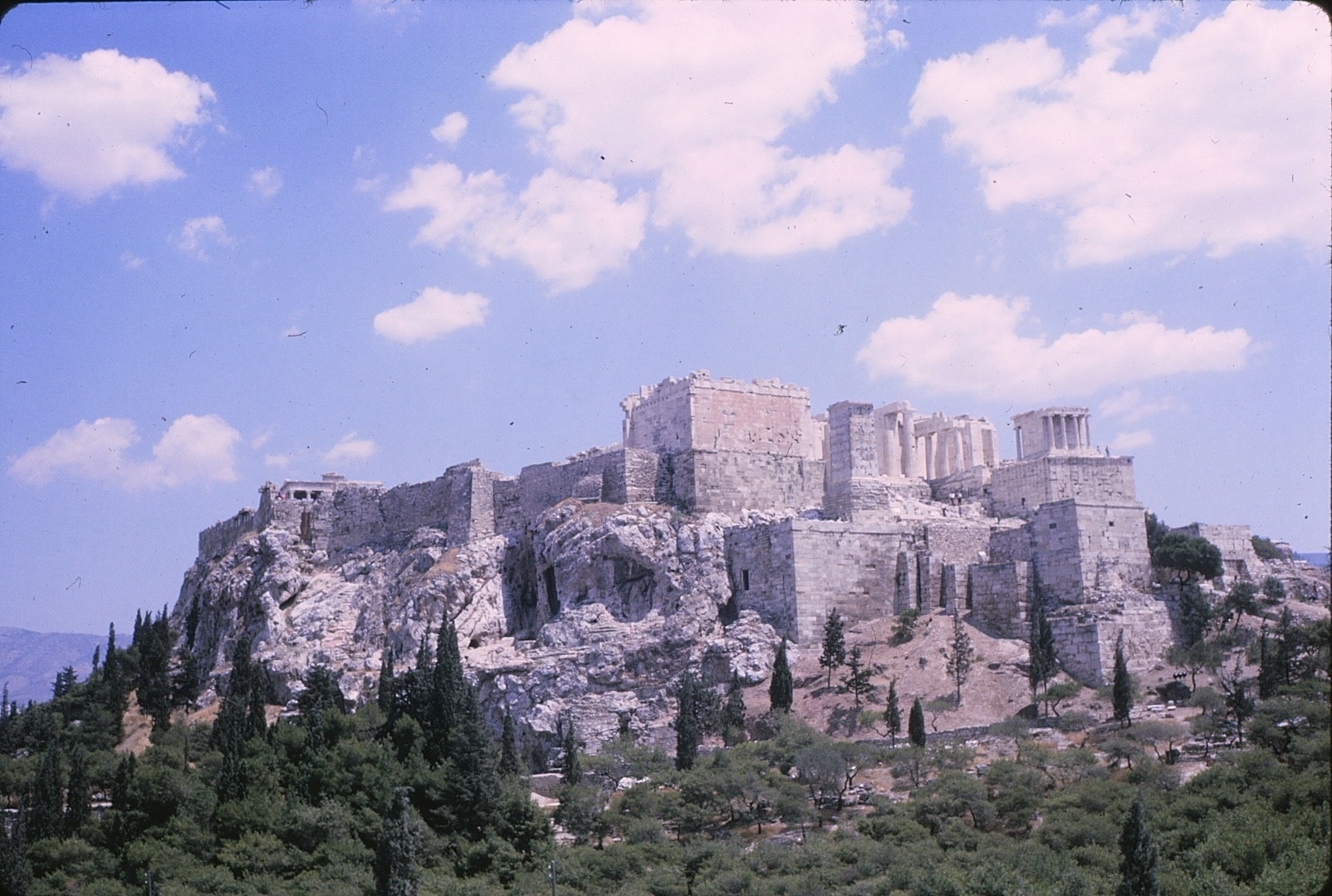
Ruins of the Acropolis, 1966 - Athens, Greece
These photos (Kodak slides) were also taken by my grandparents while on vacation in 1966, and they've been scanned but not altered. The first image is of the Acropolis of Athens, and in this citadel all the other images except the last are found.
The middle images are of the Parthenon, and also of the Odeon of Herodes Atticus, an ancient amphitheater.
Second to last is the Porch of the Caryatids, also known as the "Porch of the Maidens,"which is found at the Erechtheion, an ancient Greek temple in the Acropolis.
The last image is of the Panathenaic Stadium, the location of the Panathenaic Games between the sixth and third centuries BC. The Panathenaic Games were like the Ancient Olympic Games but only Athenians competed. In the late 1800s the stadium was rebuilt, and the first modern Olympic Games took place there in 1896.
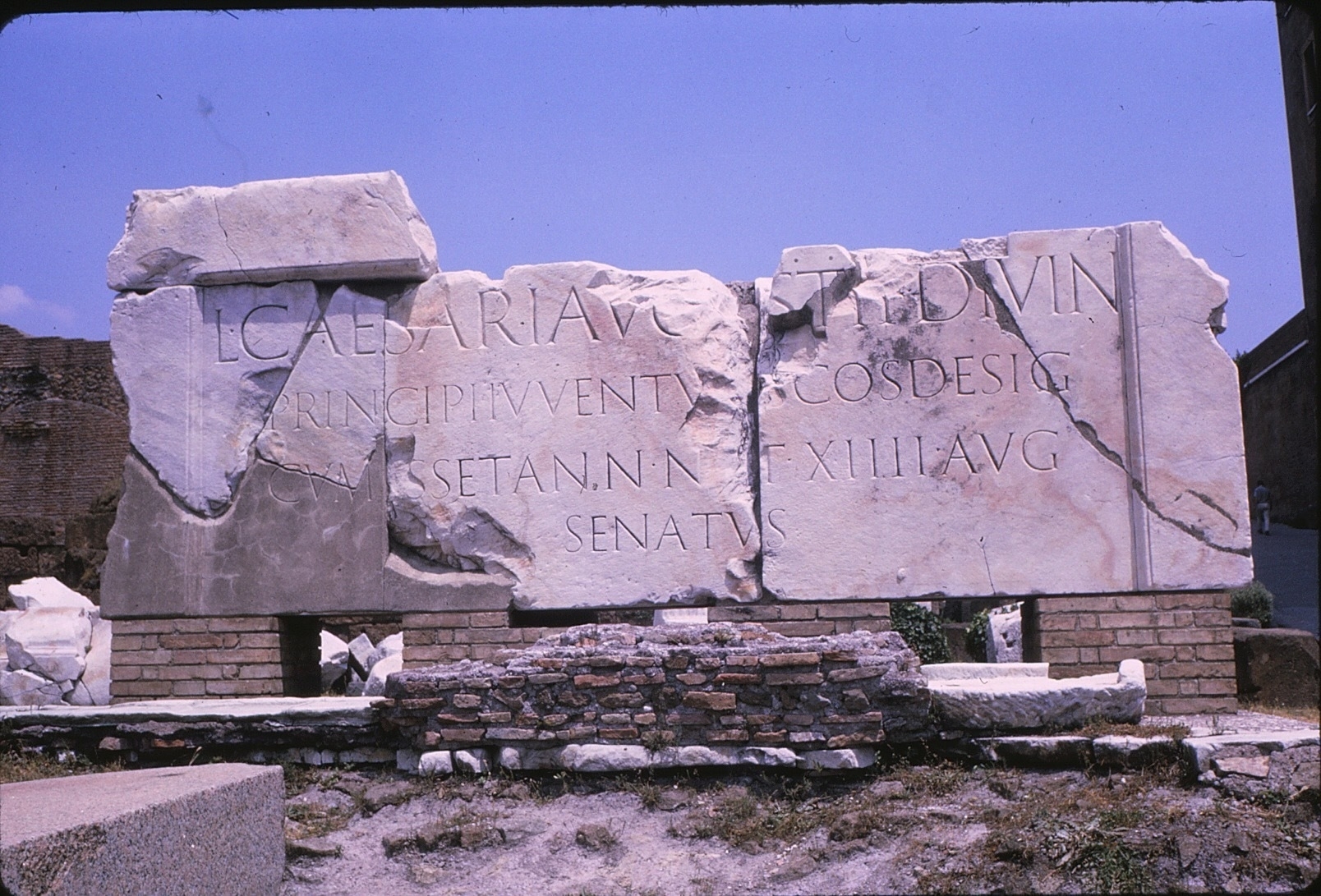
Roman Ruins, 1966 - Rome, Italy
These photos of Roman ruins were taken in 1966 by my grandparents. These images are scanned Kodak slides, and they have not been altered. The first image with the inscription is near the Basilica Aemilia of the Forum. More information can be found on the inscription at the Index of Latin Inscriptions at the University of Chicago (97A23.11).
I’m assuming the last image is also in the Forum, and the other slides are some interesting takes of the Colosseum.
A Courtesy - Not an Obligation
Some might as a courtesy, but it shouldn’t be considered an obligation.
via DF
(Revised and republished April 21st, 2025)
The artistry of the postmodern GIF
Animated GIFs: The Birth of a Medium | Off Book | PBS Digital Studios
(Revised and republished April 21st, 2025)
Presenting in Seattle
I just returned from a history conference in Seattle. It was the annual meeting of the Pacific Coast Branch of the American Historical Association (Wayback Machine link). It was a great conference, well run, and very friendly.
I presented, "Processing the Suburbs: Gender, Technology, and Paperwork in Postwar America." At the heart of the paper is the need to provide a historical component to the Digital Humanities, and to better understand the historical foundations of modern digital culture.
(Revised and republished April 21st, 2025)
Lake Tahoe Milky Way Night Time Lapse on Vimeo
Lake Tahoe Milky Way Night Time Lapse
(Revised and republished April 21st, 2025)
New Digital Humanities Minor at UCLA
I'm interested to find out more about this new program at UCLA. It seems like an excellent way to get students propelled into Digital Humanities projects. Students Should Embrace UCLA's New Digital Humanities Minor: Daily Bruin
(Revised and republished April 21st, 2025)
Born Digital newspaper project
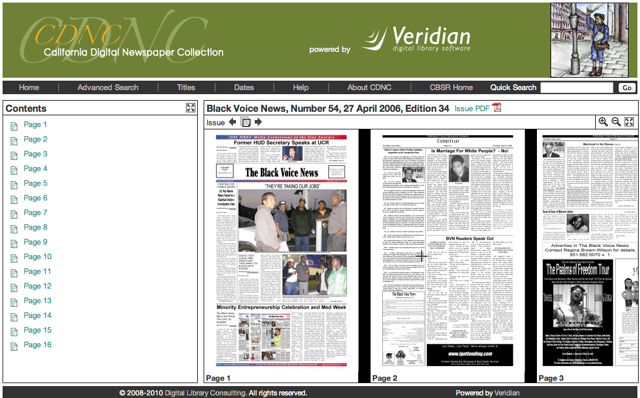
This summer I've been working on the "Born Digital" project at the Center for Bibliographic Studies and Research (CBSR) at UC Riverside. The Born Digital project is an effort to help preserve small, weekly newspapers that are currently being produced in digital formats.
While digital technology has allowed modern newspapers to be created and distributed in new and exciting ways, it has also made the records of those newspapers more fragile. The Born Digital project helps newspaper publishers preserve, and make accessible to the general public at no charge, their digital files. As an online archive, the Born Digital project is a portion of the California Digital Newspaper Collection, which holds titles from 1846 to the present.
More information about the Born Digital project is available in this UCR news article: http://newsroom.ucr.edu/2667 (Wayback Machine link)
(Revised and republished April 21st, 2025)
Blogging, 18th-Century Style
Harvard Historian Robert Darnton on Blogging, 18th-Century Style – The Getty Iris.
An 18th-century information society?
It bugs me when people say, “we live in the information society,” as if ours is the first one that ever came into existence. Every society is an information society, according to the technologies of the time.
(Revised and republished April 21st, 2025)
Remember The Conference
I'm in San Antonio, Texas, today (right down the street from ) to present a paper at the PCA/ACA conference. It's a joint conference of the Popular Culture Association and the American Culture Association: pcaaca.org My paper is on the history of modern consumer culture and digital technology.
(Revised and republished April 21st, 2025)