
Coyote Time and Empathetic Design
“Failure is a path, not an immediate result.”1
I was listening to ATP podcast, and John Siracusa discussed “Coyote Time.”
The idea of Coyote Time comes from Wile E. Coyote cartoons, and it’s rooted in video game design.
In the Wile E. Coyote and the Road Runner cartoons, Wile E. Coyote tends to end up just off the edge of a cliff, but he doesn’t fall until he realizes his dire situation.
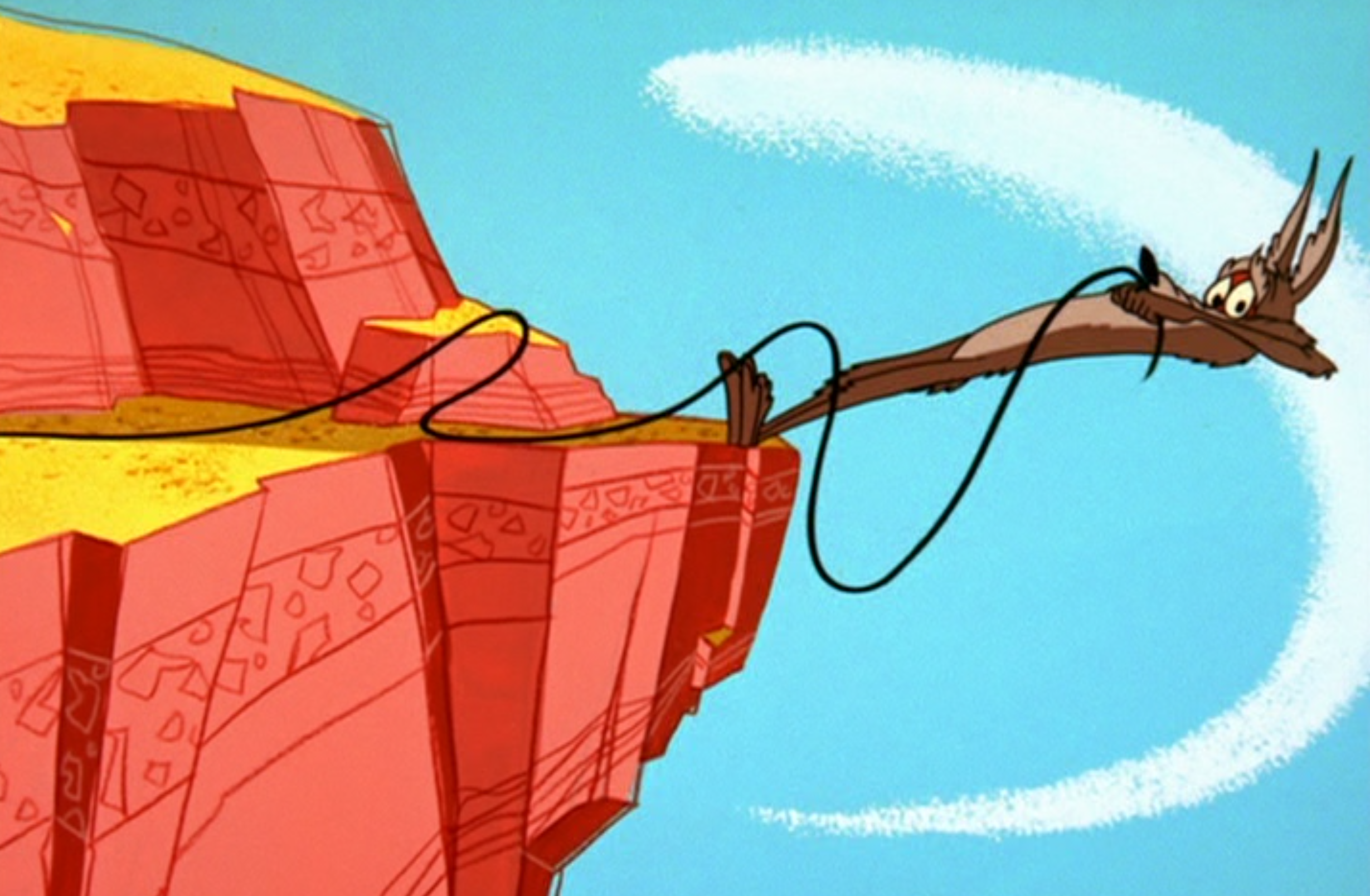
At a glance, it would appear that Coyote Time is a moment of realization, a sinking feeling of impending doom. However, in video game design, Coyote Time is more about forgiveness and empathetic design choices. Coyote Time is about designing features into a game that provide a sense of reality apart from the harsh mechanics of the game itself.
In, “Coyote Time: What Games can Teach Us About Forgiveness in Learning,” Eva Grouling Snider describes Coyote Time as providing “wiggle room” and reducing frustration, which helps to “minimize the consequences of errors, mistakes, and imperfections.”
In educational design and video game design, Coyote Time can be relied on for applying both reality and unreality, a sense of authenticity or inauthenticity, with the end goal of providing engaging experiences where the student, or player, is able to perform at their best.
For example, in video games, this is often a bit of lag introduced purposefully to enable the player to perform an action, such as jumping over a difficult object. In teaching, this could be a low-stakes formative assessment, or perhaps a quiz that can be taken multiple times but only saving the highest score. In lower division courses, Coyote Time may be increased, and then gradually designed out of the course for upper division or graduate level work.
In teaching, Coyote Time can be explicit, for example, allowing drafts to be submitted for comments prior to the formal essay. Coyote Time can also be implicit, in that it’s designed into the course and woven through the educational pathways, providing layers of support while not necessarily stating the design choices.
-
Eva Grouling Snider, “Coyote Time: What Games can Teach Us About Forgiveness in Learning,” The Teaching Innovation Blog, Ball State University, Muncie, Indiana, November 15, 2023. ↩︎
A Computer is Quite Dead
Man and Computer: A Perspective, IBM, 1967 (Computer History Museum).
“In studying the principals, the first point is that a computer is quite dead. It can do nothing without someone to give instructions.” (4:05)
“But computers have no originality, no initiative.” (19:15)
Mop and pail
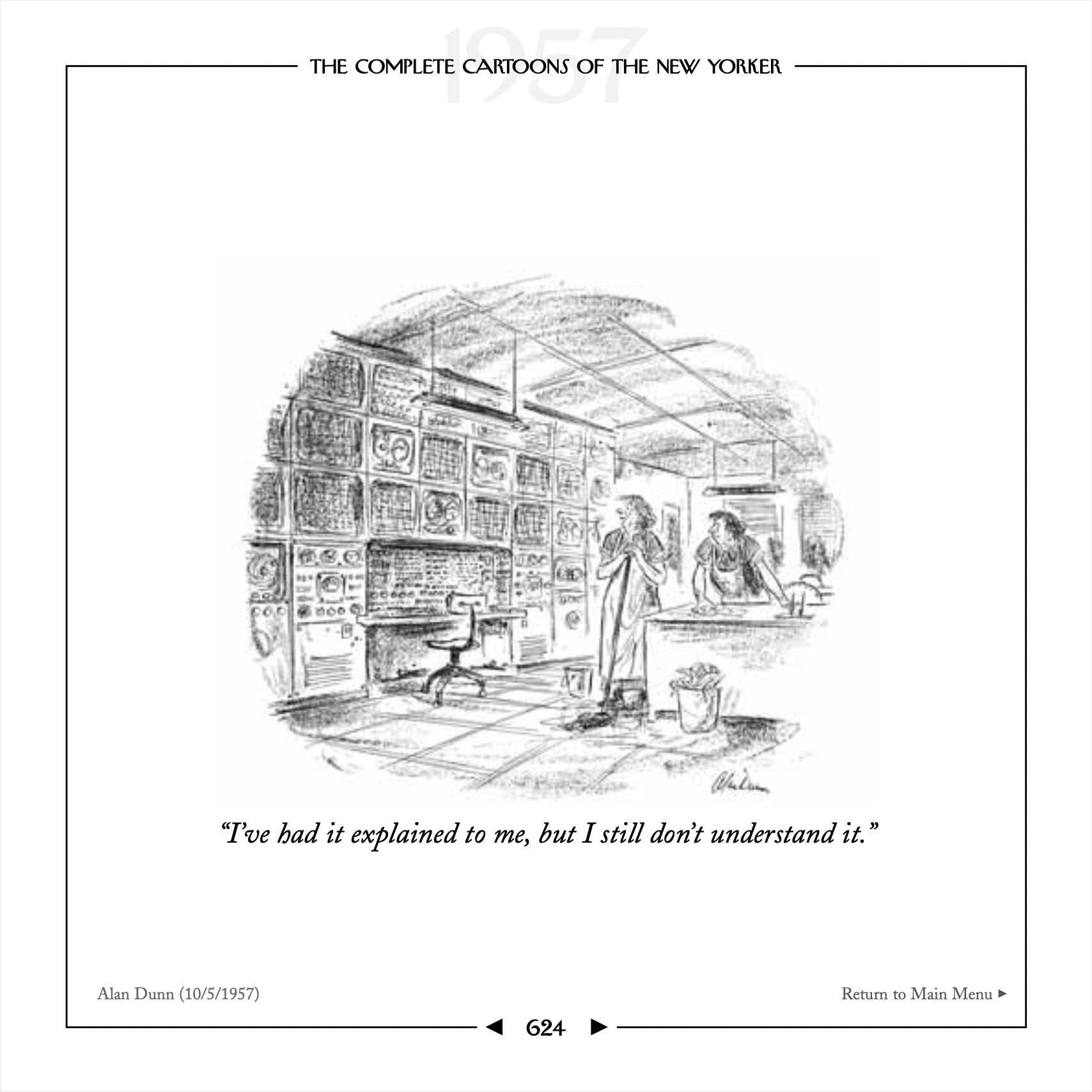
The “mop and pail” in the computer room were a constant theme for mainframes in the late 1950s and 1960s. In this cartoon the “it” is unclear, which is part of the humor. Is the “it” referencing computing in general, the fixation of people with computers, or an attempt to converse with the machine, or other possibilities?1
-
Cartoon by Alan Dunn, The New Yorker, October 5, 1957. Listed in The Complete Cartoons of The New Yorker, by Robert Mankoff and David Remnick, 2004. ↩︎
AI Road Runner
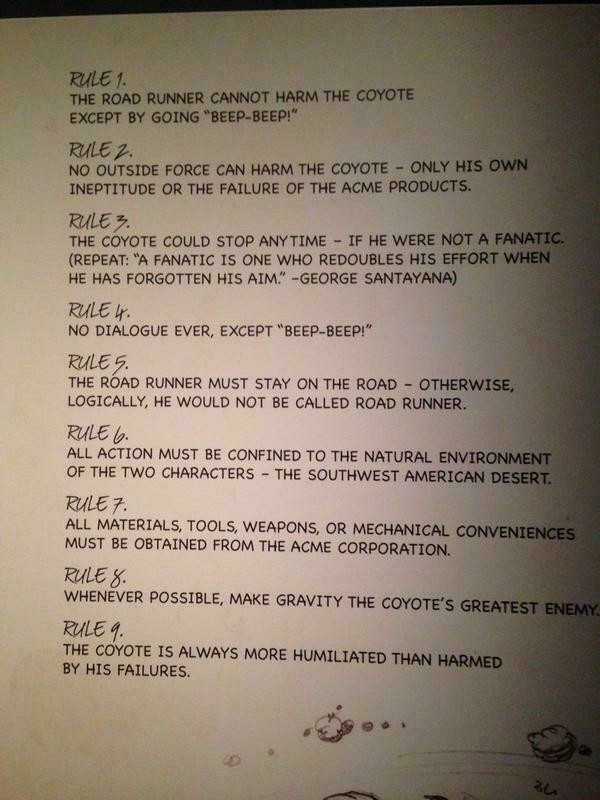
“No dialogue ever, except “Beep-Beep!”
I took this photo at the Museum of the Moving Image in Astoria, New York, eleven years ago. This was just before being told by a docent that photography was not allowed in the exhibit space (sorry!). The exhibition was titled, “What’s Up, Doc? The Animation Art of Chuck Jones.”
Jason Kottke also posted “The Rules of Road Runner and Wile E. Coyote Cartoons” around the same time, in 2012 (a vintage post). The two versions are pretty close!
As Chuck Jones says in Chuck Amuck, “The rules and disciplines are properly difficult to identify. But there are – there must be – rules. Without them, comedy slops over the edges. Identity is lost.”1
This reminds me of Claude Shannon’s notion: “The rules of a game provide a sharply limited environment in which a machine may operate, with a clearly defined dial for its activities.”2
When thinking of AI, it seems there are no rules at the moment. The game is being played while the rules are being made.
Wills, Trusts, Estates, and Shell Companies
“First you must ask yourself…are you wealthy?”
The Laundromat on Netflix (2019) is quite good, and it’s an interesting way to make something like the Panama Papers more relatable. It seems that some films focus on the technology of the leak first (which I enjoy, of course), rather than how the physical world is impacted by the digital (which, as in The Laundromat, is more approachable and interesting).
Gary Oldman and Antonio Banderas are wonderful in the movie, they provide both comedy and information. In the educational technology field, this serving of “chocolate covered broccoli” is difficult – it’s either too much of one or the other. In The Laundromat, the satire is a perfect mix of alarming humor.
After watching The Laundromat we watched The Descendants, which is also a great film, and also deals with trusts, estates, and inheritance, among other things.
Maybe a rewatch of Knives Out or The Grand Budapest Hotel are next on the movie list.
The computer programmer catcher
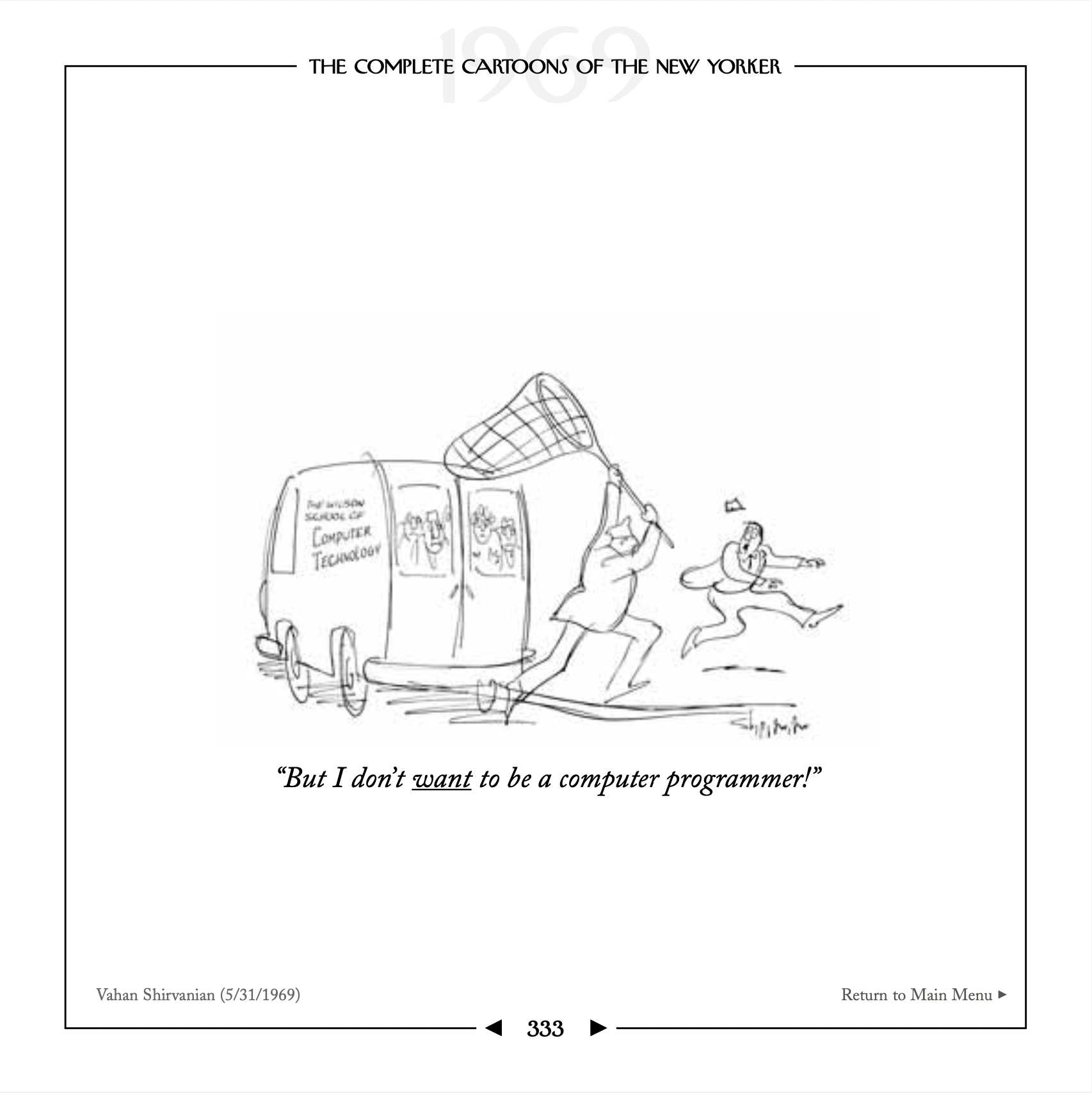
These days it’s more likely to be AI engineering than computer programming, but the rapid cultural change is similar.1
The cartoon is from the book (with accompanying CD image files), The Complete Cartoons of The New Yorker, by Robert Mankoff and David Remnick, 2004.
-
Cartoon by Vahan Shirvanian, The New Yorker, May 31, 1969. Listed in The Complete Cartoons of The New Yorker, by Robert Mankoff and David Remnick, 2004. ↩︎
AI slop
John Oliver on Last Week Tonight regarding AI slop.
“AI slop is basically the newest iteration of spam.” (3:26)
“It’s not just that we can get fooled by fake stuff, it’s that the very existence of it then empowers bad actors to dismiss real videos and images as fake. It’s an idea called the liar’s dividend.” (24:33)
“AI slop can be…worryingly corrosive to the general concept of objective reality.” (25:46)
Siri in 1967?
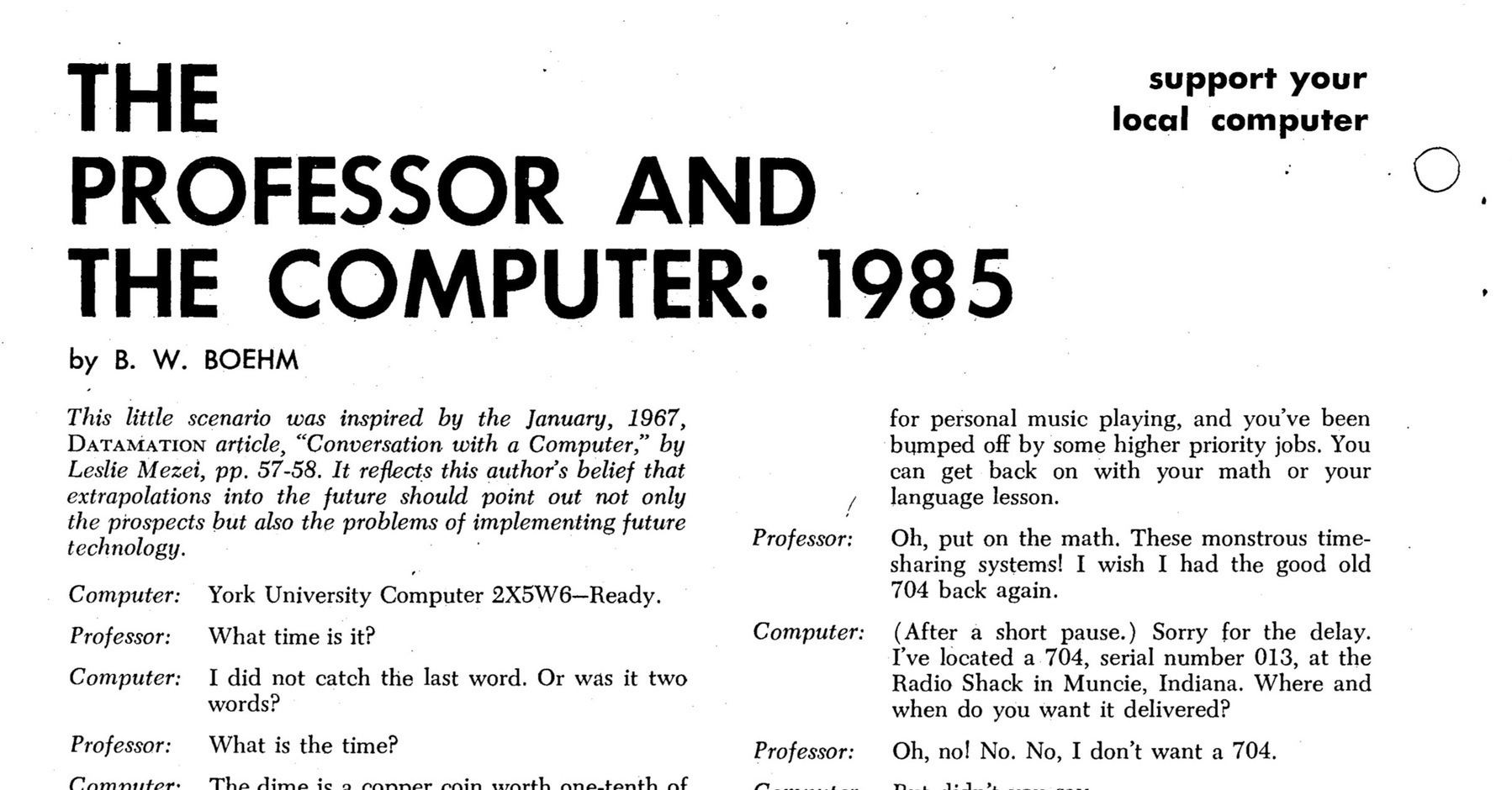
“The Professor and the Computer: 1985,” from Datamation magazine, August 1967 (pp. 56, 58).
This back-and-forth reminds me of the current state of Apple’s Siri, here in 2005…sorry, 2025.
Professor: Oh, put on the math. These monstrous time-sharing systems! I wish I had the good old 704 back again.
Computer: (After a short pause.) Sorry for the delay. I've located a 704, serial number 013, at the Radio Shack in Muncie, Indiana. Where and when do you want it delivered?
Professor: Oh, no! No. No, I don't want a 704.
Computer: But didn't you say ...
Professor: Never mind what I just said. I ...
Computer: Okay, I'll disregard your statement just previous. Now, where do you want your 704 delivered?
The notion that the computer would place an order for another computer, an IBM 704, also reminds me of Amazon’s AI-powered Alexa+ and its connection to consumers and online shopping.
The slow roll-outs of Alexa+ and Apple’s “new” Siri and Apple Intelligence are related to the complexity of LLMs and AI, especially in wide release to the general public. Tech companies are realizing that the “last mile is a lot farther away than they anticipated." It’s one thing to have an extra pack of kitchen sponges delivered, and another for a mainframe computer to show up on the doorstep.
We're in TDF: Unchained!
We’re in TDF: Unchained! We finished watching Tour de France: Unchained on Netflix, and we’re in the last episode in Nice! We’re blurry figures on the side of the road during the time trial, but still there ☺️ (S3: E8)
I took this video of Tadej Pogačar at the time trial. The video was taken with a DJI Osmo Pocket 3 in slow motion, but slow motion video doesn’t include audio. So I used my iPhone to record ambient sound, and then synced the video and audio together with Final Cut Pro on Mac.

Tour de France: Unchained - Season 3 on Netflix
So excited to watch Tour de France: Unchained, Season 3, especially after visiting the Tour during its filming.
I’m sure it’ll be a different perspective, enlightening our trip to week 3 of the Tour last year in July, 2024.