digital humanities
Notes on Virtual Lectures
The virtual lecture that Professor Levy gave to her CHASS F1RST class on Monday went very well. This was the first time we attempted to produce a virtual lecture, and I’ve compiled some notes on the process and our experience.
1. The setup will take 5–10 minutes.
Professor Levy and I had both done Google Hangouts before, but never for such a large audience. Just connecting the laptop to the projector can take a minute or two, and then there’s the webcam, and the initiation of the Google Hangout. In order to keep students engaged during all this, I played the “#Hashtag” video with Jimmy Fallon and Justin Timberlake. The idea here was to inject a little humor, and also consider digital technology as a theme for the lecture. After the video, Judy (the TA), addressed the class and let them know about the video conferencing aspect via Google Hangouts.
Virtual Lectures and the Digital Classroom
This winter quarter I am a research assistant working on digital pedagogy and instruction at UC Riverside for Professor Juliette Levy. The class consists of about 60 students, and it’s a CHASS F1RST Humanities Course (Wayback Machine link) covering the history of Latin America. Even though this is a regular in-class course, we’re using a variety of digital tools to help broaden the learning experience. These tools, which are helpful for managing the class itself and also creating real interaction between students, include:
Lincoln's shadow
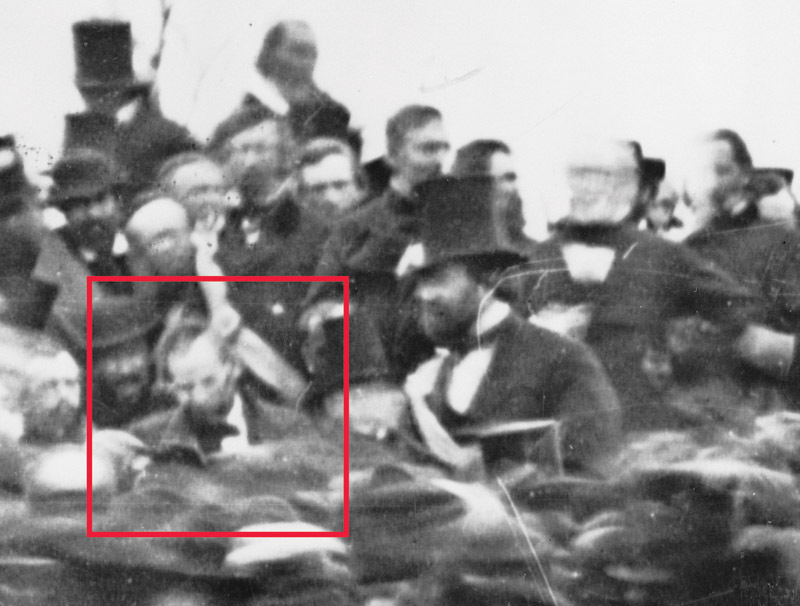
Today is the 150th anniversary of the Gettysburg Address.
Lincoln casts quite a shadow in history. There was a grand speech before Lincoln's at Gettysburg in 1863 by Edward Everett, a well-known orator.
Speaking for 2 hours and over 13,000 words Everett's speech was complex, referencing Ancient Greece and using terms in Latin. Today Everett's speech is largely "invisible."
Lincoln spoke only for 2 minutes, and his 272 words are inscribed on the Lincoln Memorial.
How the Enigma Machine worked
Murlyn Hakon of Bletchley Park explains how the Enigma Machine worked.
The remarkable thing about Enigma, is that when you press a letter on the keyboard and the subsequent enciphered letter lights up to the rear of the machine, the chances of that letter lighting up are nearly 158 million million million to 1.
(Revised and republished April 21st, 2025)
Mavis Batey: Bletchley Park codebreaker
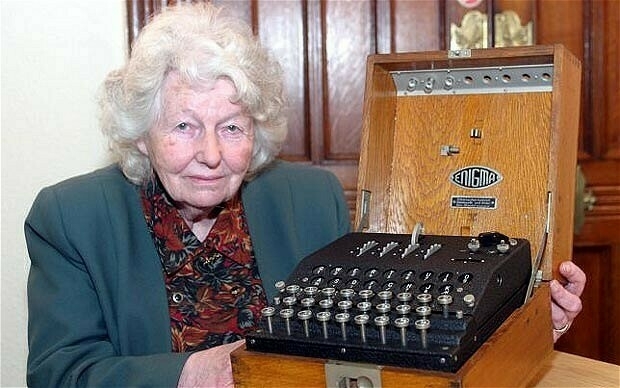
Mavis Batey was one of the codebreakers working at Bletchley Park during World War II. She recently passed away at age 92. Batey was part of the codebreaking team that ensured a successful landing for Allied forces on D-Day.
She initially worked in London, checking commercial codes and perusing the personal columns of The Times for coded spy messages. After showing promise, she was plucked out and sent to Bletchley to work in the research unit run by Dilly Knox. Knox had led the way for the British on the breaking of the Enigma ciphers, but was now working in a cottage next to the mansion on new codes and ciphers that had not been broken by Hut 6, where the German Army and Air Force ciphers were cracked. “It was a strange little outfit in the cottage,” Mavis said. Knox was a true eccentric, often so wrapped up in the puzzle he was working on that he would absent-mindedly stuff a lunchtime sandwich into his pipe rather than his tobacco: “Organisation is not a word you would associate with Dilly Knox. When I arrived, he said: 'Oh, hello, we’re breaking machines, have you got a pencil?’ That was it. I was never really told what to do. I think, looking back on it, that was a great precedent in my life, because he taught me to think that you could do things yourself without always checking up to see what the book said."
(Revised and republished April 21st, 2025)
George Romero: It's not about the zombies
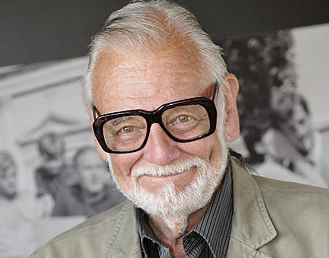
Horror film legend George Romero on zombies:
I always used the zombie as a character for satire or a political criticism...
I think the zombies could be anything. They could be a hurricane or a tornado. It’s not about the zombies. The important thing to me is the way the people react to this horrible situation, misbehave, make mistakes and screw themselves up.
And I need to get a pair of those glasses too!
(Revised and republished April 21st, 2025)
Quantum Computing 101
Quantum Computers Animated, Piled Higher and Deeper (PHD Comics)
The illustrations for this video on quantum computing are fantastic, especially the "0/1" transition at 1:40.
(via Hacker News)
(Revised and republished April 19th, 2025)
Rewiring Class Emails and Student Interaction with Piazza
In a previous post I wrote about the experience of teaching an online class as a TA. One of the primary tools we used for the course was Piazza, and it was instrumental in shifting the burden of email to a more open and constructive arena.
Infectious Information: History and the Dissertation Quarantine
On July 22nd, 2013, the American Historical Association published to their blog a statement regarding the embargo of dissertations (Wayback Machine link). The suggestion was for digital embargo periods to be lengthened from around 1-3 years to 6 years, so that new PhD graduates could revise their dissertation manuscript for the purpose of creating a book for publication. As a significant revision of the dissertation, this book would then become a major component within the process of applying for tenure.
The back-end of online classes
In "Who is Driving the Online Locomotive," (Wayback Machine link) Rob Jenkins asks some pertinent questions about the force and direction of online education. There is definitely the feeling that something is coming, and those who aren't prepared will be lost by the wayside...or flattened by the train. However, this feeling of online education as the next-big-thing has been palpable for a couple of decades now. The latest gust of wind in the sails has been the infamous MOOC, but it's really more about the intersection of budget cuts and the ubiquity of social networking. It's also very unfortunate that there is usually little discussion of the differences between types of online classes – a MOOC with thousands of participants is a very different thing from a small online-class of 40 students.