
history
AI Road Runner
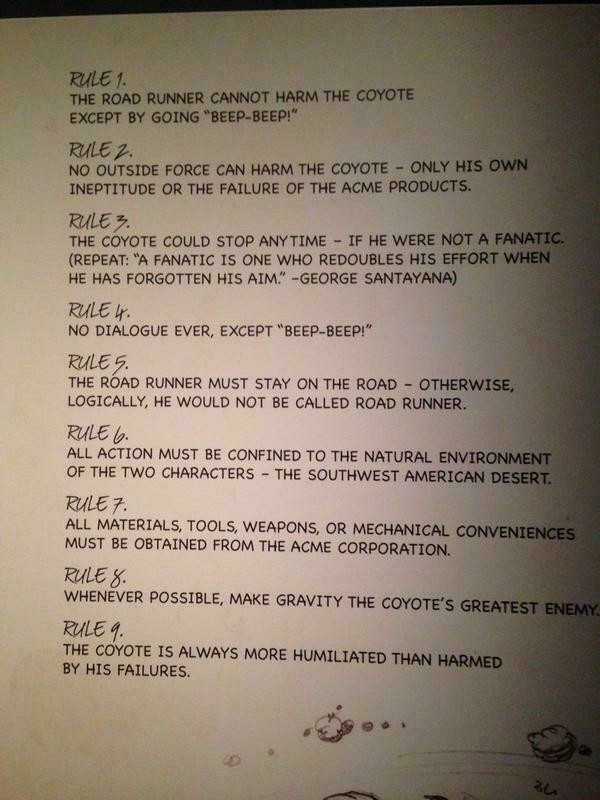
“No dialogue ever, except “Beep-Beep!”
I took this photo at the Museum of the Moving Image in Astoria, New York, eleven years ago. This was just before being told by a docent that photography was not allowed in the exhibit space (sorry!). The exhibition was titled, “What’s Up, Doc? The Animation Art of Chuck Jones.”
Jason Kottke also posted “The Rules of Road Runner and Wile E. Coyote Cartoons” around the same time, in 2012 (a vintage post). The two versions are pretty close!
As Chuck Jones says in Chuck Amuck, “The rules and disciplines are properly difficult to identify. But there are – there must be – rules. Without them, comedy slops over the edges. Identity is lost.”1
This reminds me of Claude Shannon’s notion: “The rules of a game provide a sharply limited environment in which a machine may operate, with a clearly defined dial for its activities.”2
When thinking of AI, it seems there are no rules at the moment. The game is being played while the rules are being made.
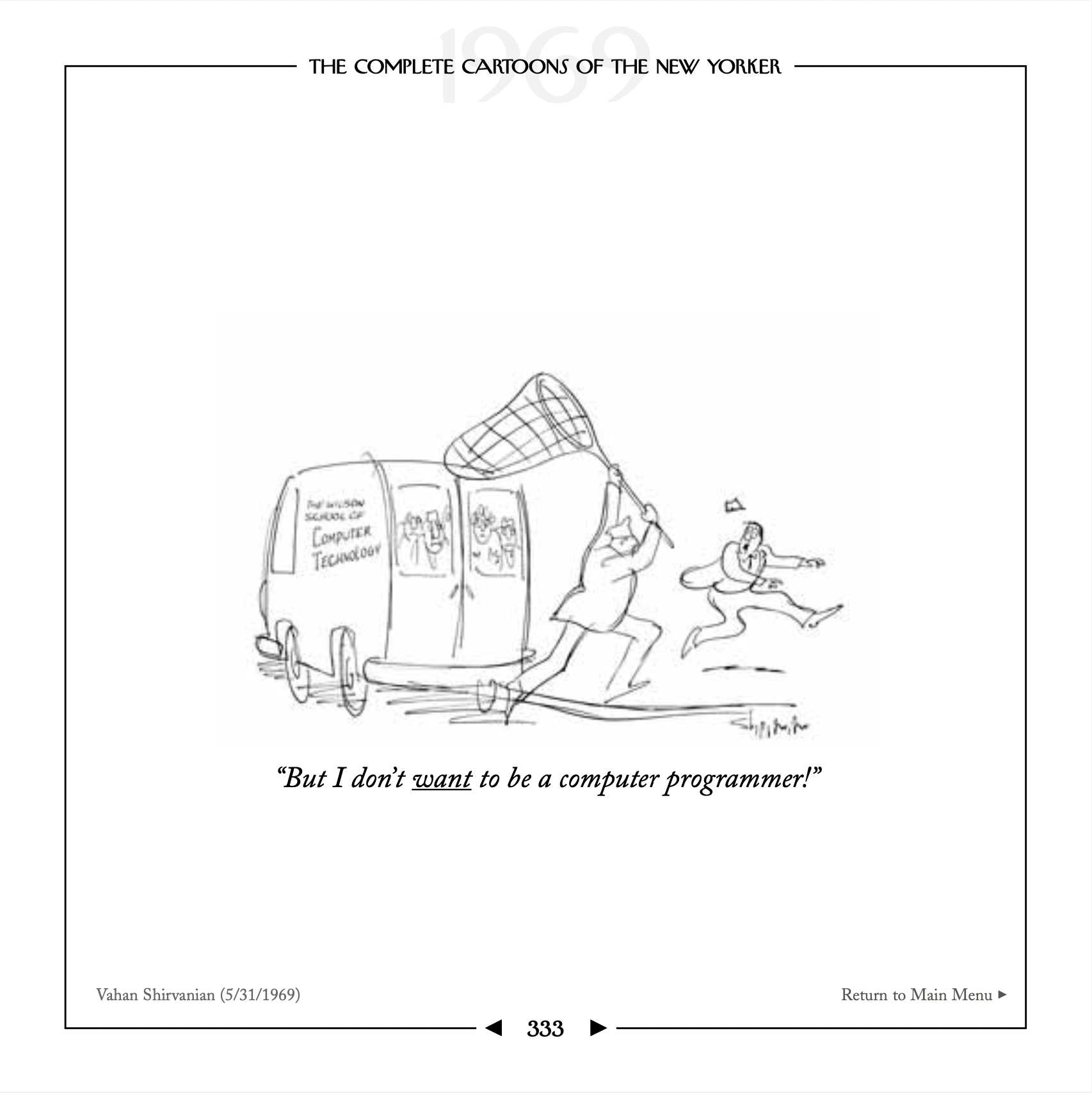
The computer programmer catcher
These days it’s more likely to be AI engineering than computer programming, but the rapid cultural change is similar.1
The cartoon is from the book (with accompanying CD image files), The Complete Cartoons of The New Yorker, by Robert Mankoff and David Remnick, 2004.
-
Cartoon by Vahan Shirvanian, The New Yorker, May 31, 1969. Listed in The Complete Cartoons of The New Yorker, by Robert Mankoff and David Remnick, 2004. ↩︎
AI slop
John Oliver on Last Week Tonight regarding AI slop.
“AI slop is basically the newest iteration of spam.” (3:26)
“It’s not just that we can get fooled by fake stuff, it’s that the very existence of it then empowers bad actors to dismiss real videos and images as fake. It’s an idea called the liar’s dividend.” (24:33)
“AI slop can be…worryingly corrosive to the general concept of objective reality.” (25:46)
Siri in 1967?
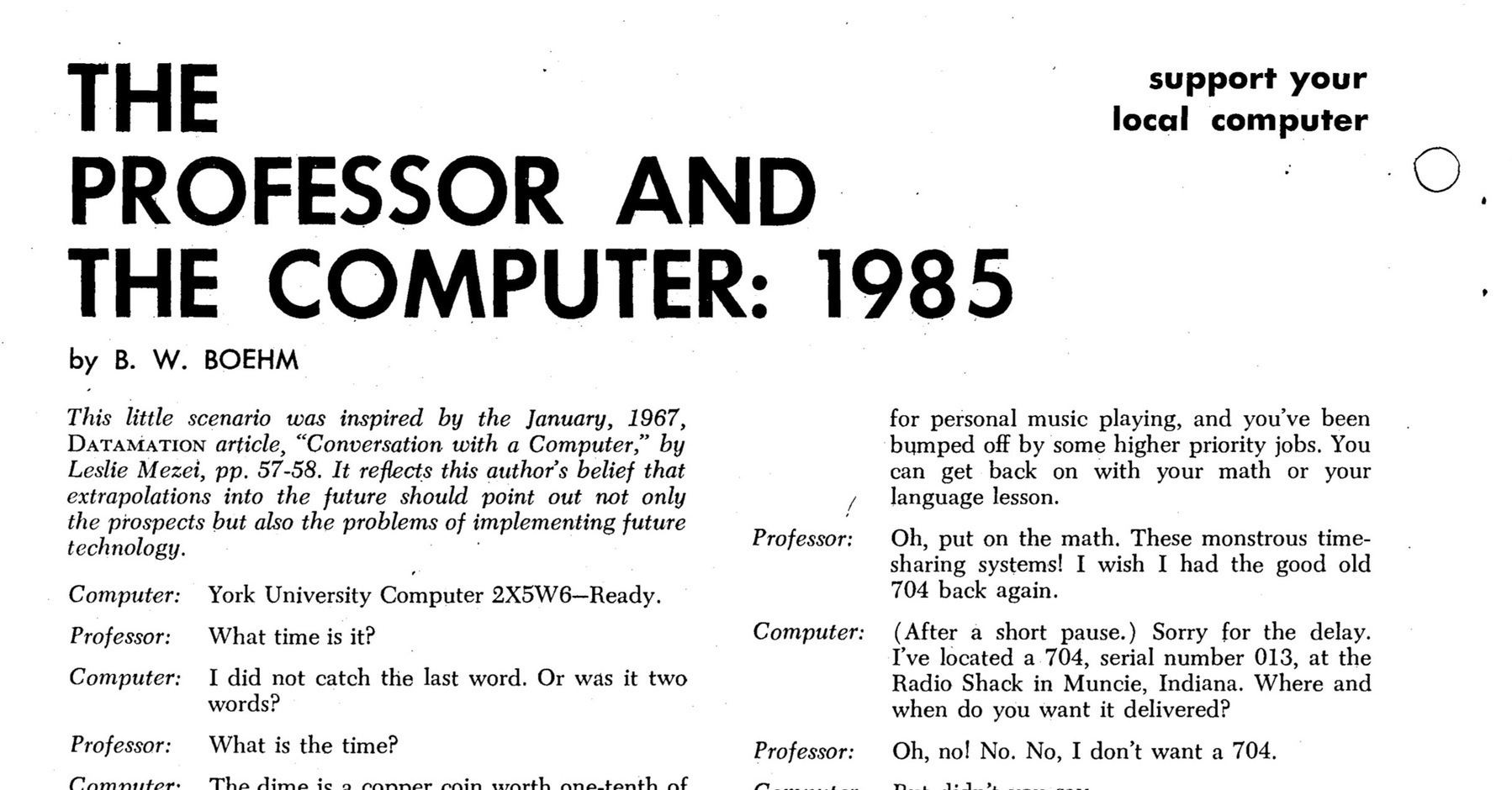
“The Professor and the Computer: 1985,” from Datamation magazine, August 1967 (pp. 56, 58).
This back-and-forth reminds me of the current state of Apple’s Siri, here in 2005…sorry, 2025.
Professor: Oh, put on the math. These monstrous time-sharing systems! I wish I had the good old 704 back again.
Computer: (After a short pause.) Sorry for the delay. I've located a 704, serial number 013, at the Radio Shack in Muncie, Indiana. Where and when do you want it delivered?
Professor: Oh, no! No. No, I don't want a 704.
Computer: But didn't you say ...
Professor: Never mind what I just said. I ...
Computer: Okay, I'll disregard your statement just previous. Now, where do you want your 704 delivered?
The notion that the computer would place an order for another computer, an IBM 704, also reminds me of Amazon’s AI-powered Alexa+ and its connection to consumers and online shopping.
The slow roll-outs of Alexa+ and Apple’s “new” Siri and Apple Intelligence are related to the complexity of LLMs and AI, especially in wide release to the general public. Tech companies are realizing that the “last mile is a lot farther away than they anticipated." It’s one thing to have an extra pack of kitchen sponges delivered, and another for a mainframe computer to show up on the doorstep.
Honeywell Rabbit Sculpture
Honeywell Rabbit Sculpture (ca. 1965) at the Computer History Museum.
The Rabbit sculpture features on pages 48-49, in Core magazine (2015), published by the Computer History Museum.
The sculpture, made of resistors, was created around 1965, and part of an advertising campaign featured in Business Week magazine.
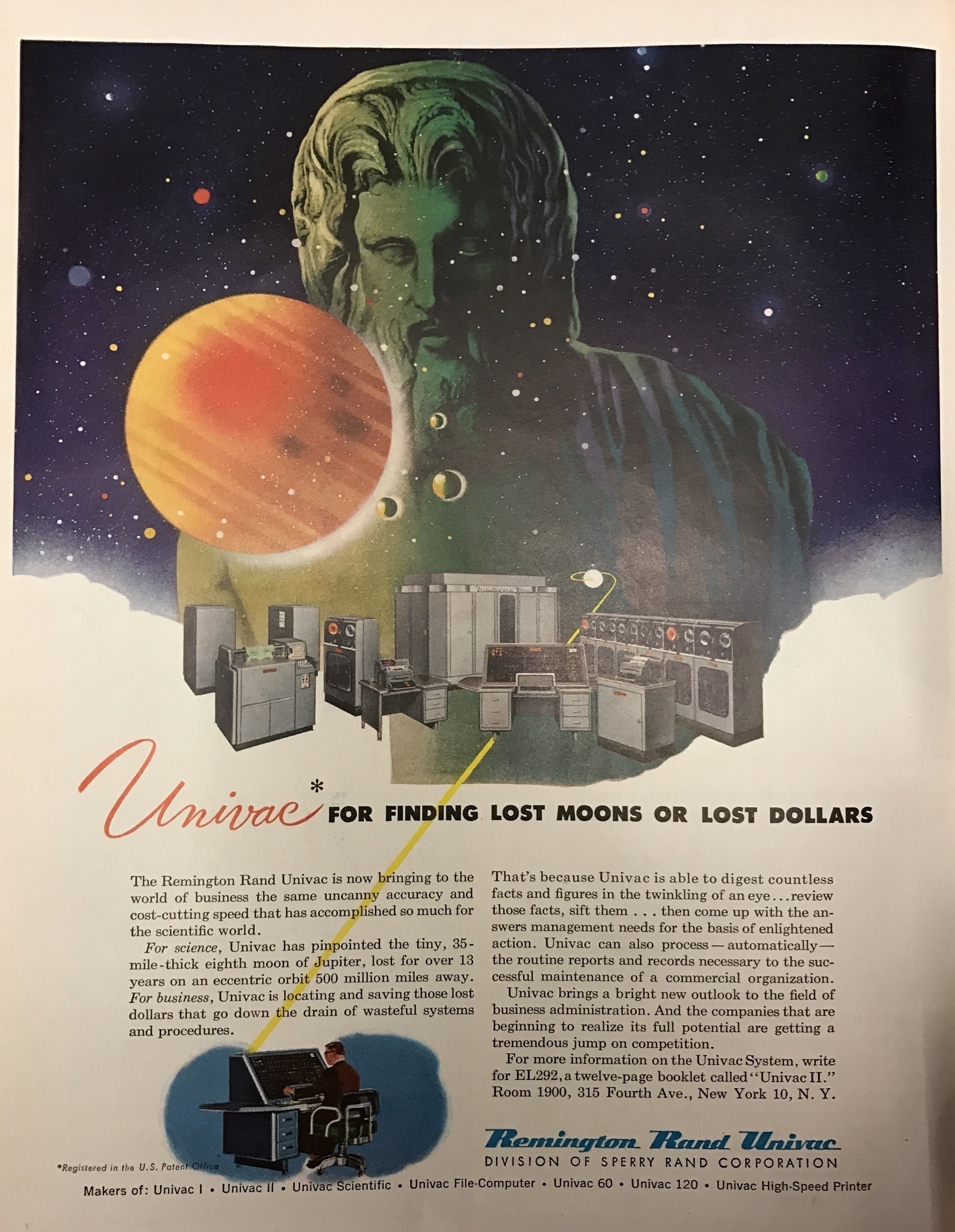
Univac ad - Fortune magazine, September 1956
Early computers, from the scientific world to the business world.
Deep LA Conference at The Huntington
I’ll be presenting a paper at the “Deep L.A.” graduate history conference taking place at The Huntington on October 3rd.
The conference is sponsored by UCLA and USC, with a focus on Los Angeles and Southern California regional history: http://lahistoryconference.tumblr.com
I’m presenting a portion of a chapter in my dissertation, which focuses on mainframes, paperwork, and the electrical utility company Southern California Edison during the postwar era.

(Revised and republished March 28th, 2025)
People Working in Computer Room
As part of my dissertation I’m working with the Southern California Edison Photographs and Negatives collection at the Huntington Library. The photographic collection is now available online at the Huntington Digital Library. A few years ago, when I first came across this collection, it was only available in-person on a single computer.
I stitched the two photos below into an animated gif, showing the transition within computerized space. The images are from “People working in computer room with 1” tape drives" in the SCE collection at the Huntington. These before and after photos taken in 1966 at SCE appear to show how people would fit alongside and interact with the mainframe computer.
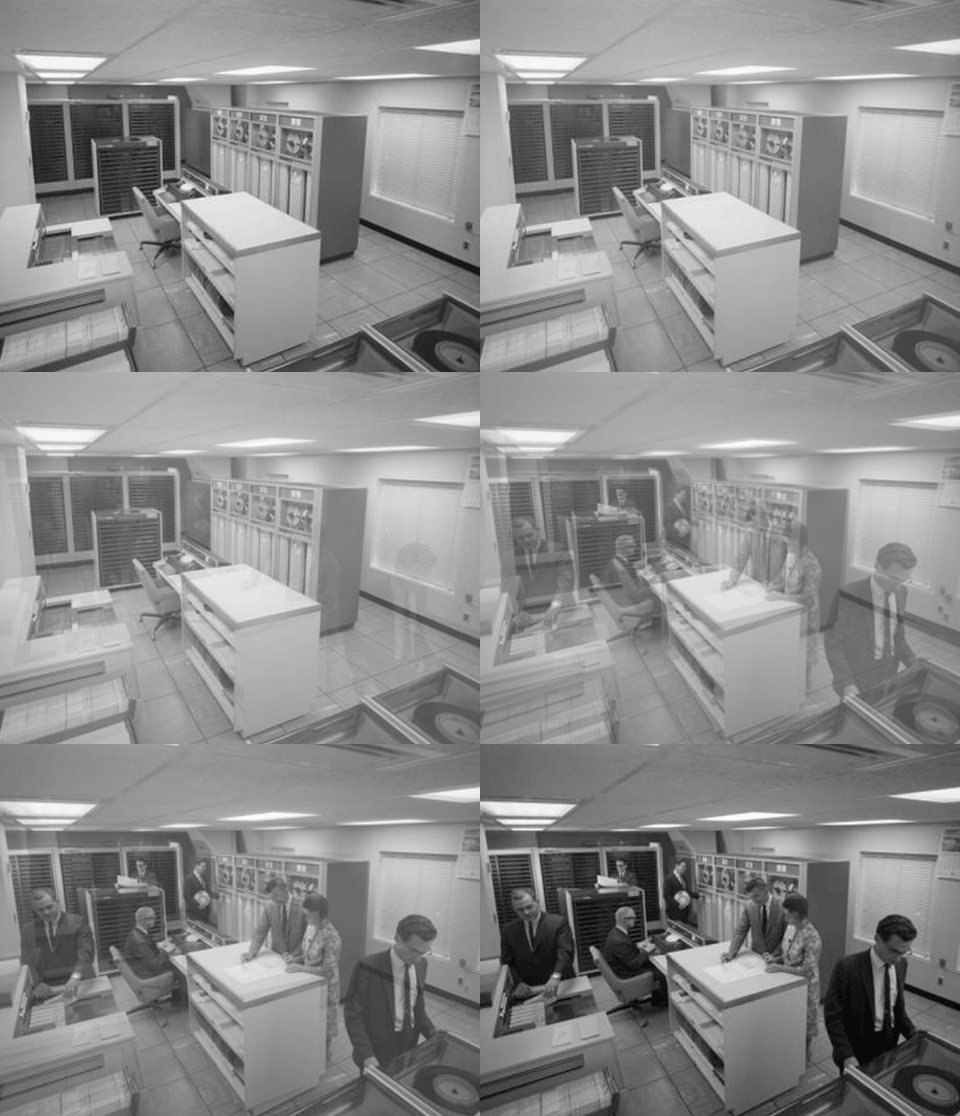
Photographs such as these often show many people in the room, mostly trying to look busy, with a few of them staring at equipment or pretending to use the machine. These staged photographs for internal use are similar to those used for marketing. In both cases the images are designed to show how people and computers would work together.
The mainframe in these photographs is a Control Data Corporation mainframe, and it appears to be a CDC 3200 system.
The Computer History Museum in Silicon Valley has a brochure for the CDC 3200 mainframe (PDF) available online as well.
(Revised and republished March 29th, 2025)
Univac 494 marketing photographs
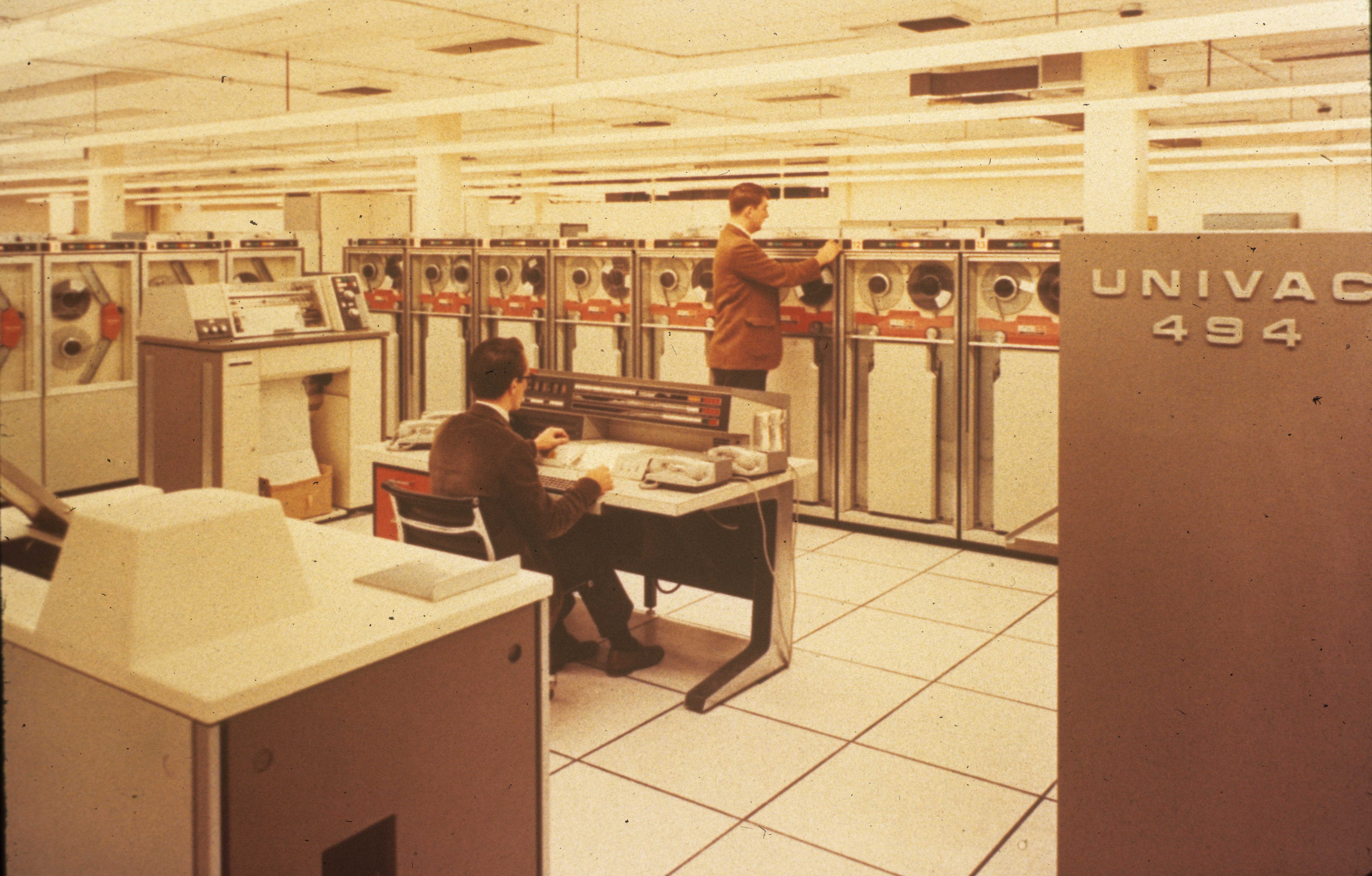
I came across this Univac photograph online, showing three people working in a computer room. Using a reverse Google Image Search, it appears that this image and a few others like it were posted online around 2006. From there it looks like the pictures were blogged here and there, recently posted to Pinterest, then making their way to Instagram. I can’t seem to find the original image online, but this one looks like a scan of a partially damaged photo most likely used for marketing. It’s possible that this image could be printed in a brochure other other advertisement.
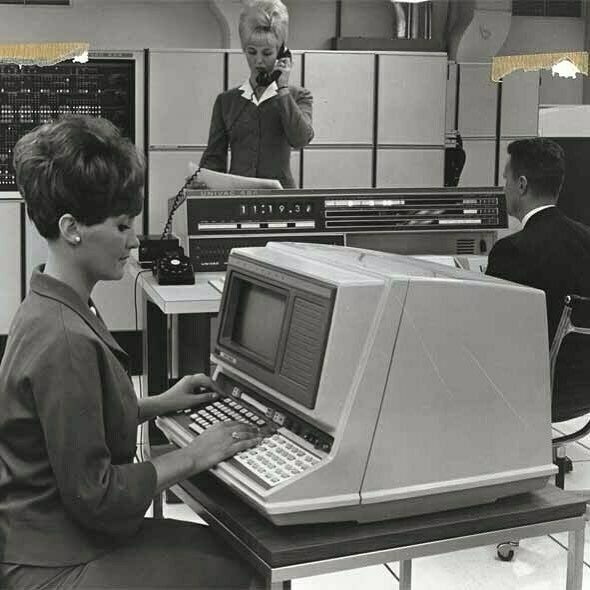
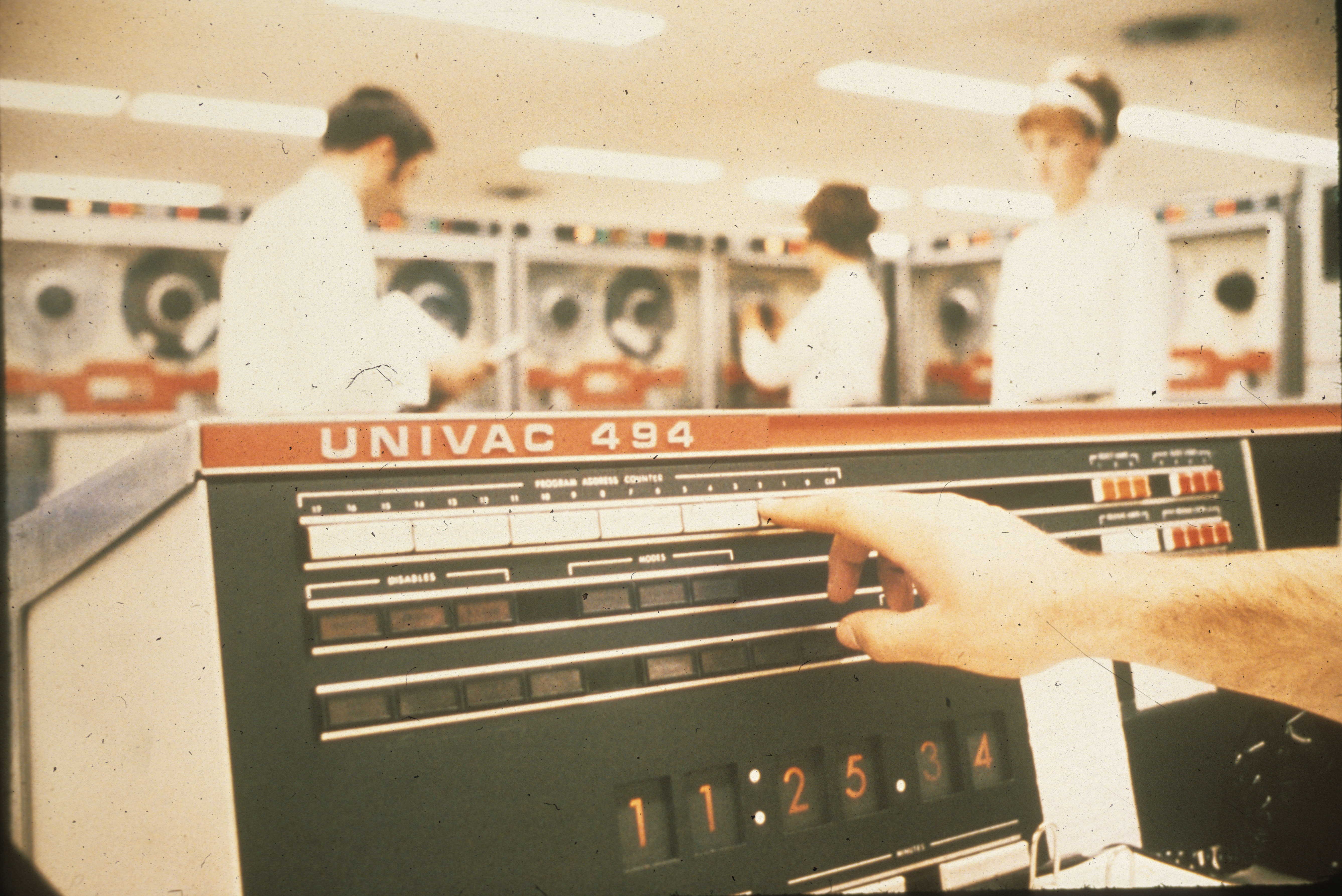
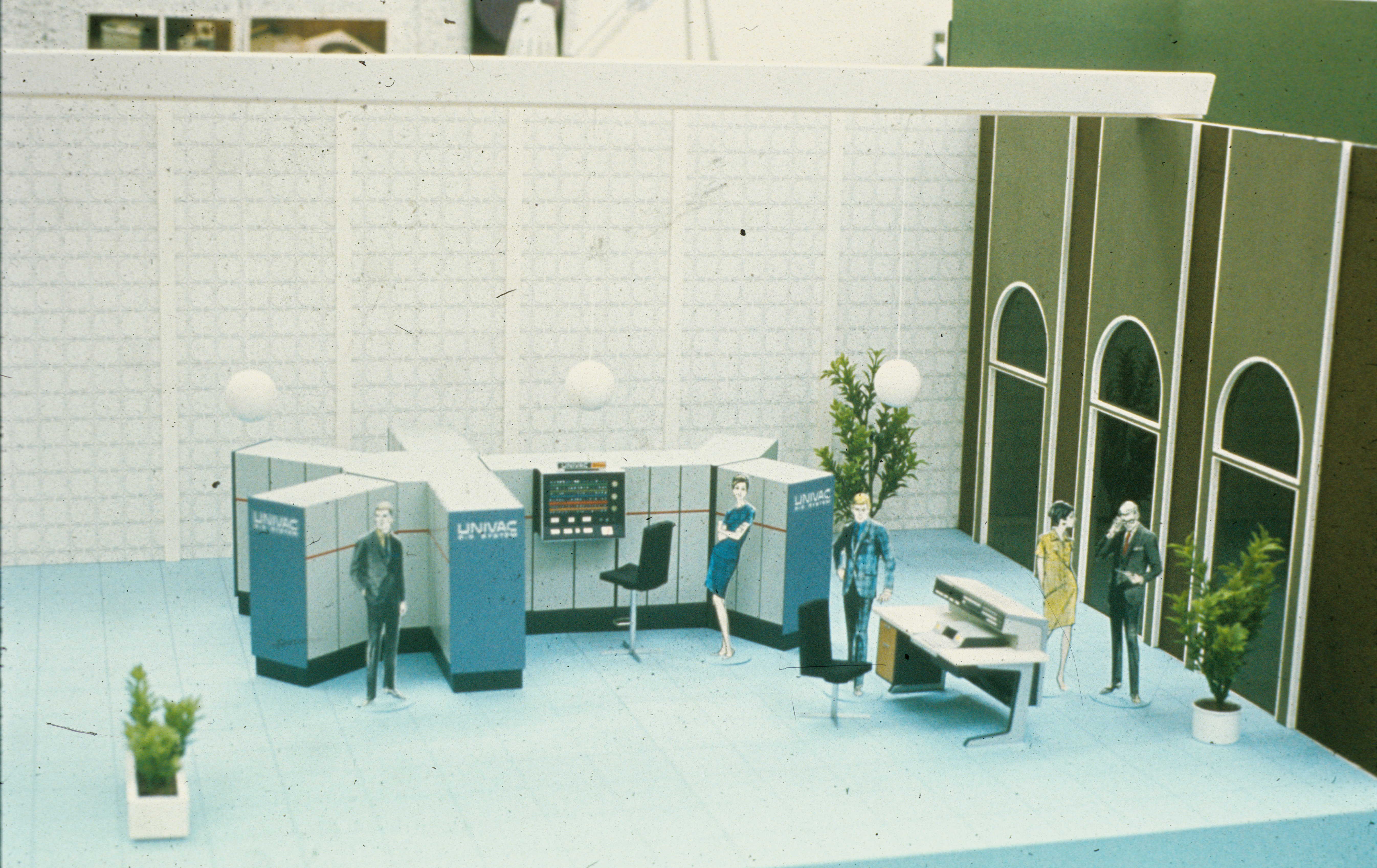
The image above is a little fuzzy, but the mainframe appears to be a Univac 494. This would date the photograph to 1965 or 1966 or so. The additional photographs below offer a closer view of the mainframe console and its peripherals. There’s also more information on the Univac 494 at Ed Thelen’s website (photos linked below).
(Revised and republished March 30th, 2025)
Finding the Death of the Mainframe

I came across a blog post (Wayback Machine link) discussing the 50th anniversary of the IBM System/360, and it mentioned a prediction about the so-called “death of the mainframe.”
I had seen the photo before, of Stewart Alsop literally eating his words “Death to the Mainframe” with a knife and fork, but I had not seen the original quote in print, and I couldn’t find a citation.
Back issues of InfoWorld magazine are online at Google Books, but searches there were not helpful. I kept finding references to the prediction, but not the original statement itself.
Then I happened across this forum discussion about the “Death of the Mainframe” on Google Groups, and one of the members noted that the original statement did not happen in the InfoWorld magazine, but at a conference.
The first reference in print to the death of the mainframe by Alsop is in the February 22, 1993 issue of InfoWorld magazine on page 4. The article reads:
Last week, we held the second InfoWorld Editorial EXPOsure, where 35 vendors from the Northwest showed hot new products to 26 of our editors and reporters and more than 70 of our readers (plus an odd assortment of other insiders and cognoscenti).
We also had a fun panel featuring columnists Cheryl Currid and Brian Livingston, along with four of our staff. The panel gave a lively discussion about the role of the mainframe in future information systems. I predicted that the last mainframe will be unplugged on March 15, 1996. Cheryl Currid was a little kinder and predicted that all remaining mainframes will blow up on December 31, 1999, when their clocks cannot figure out how to make the change to the year 2000.
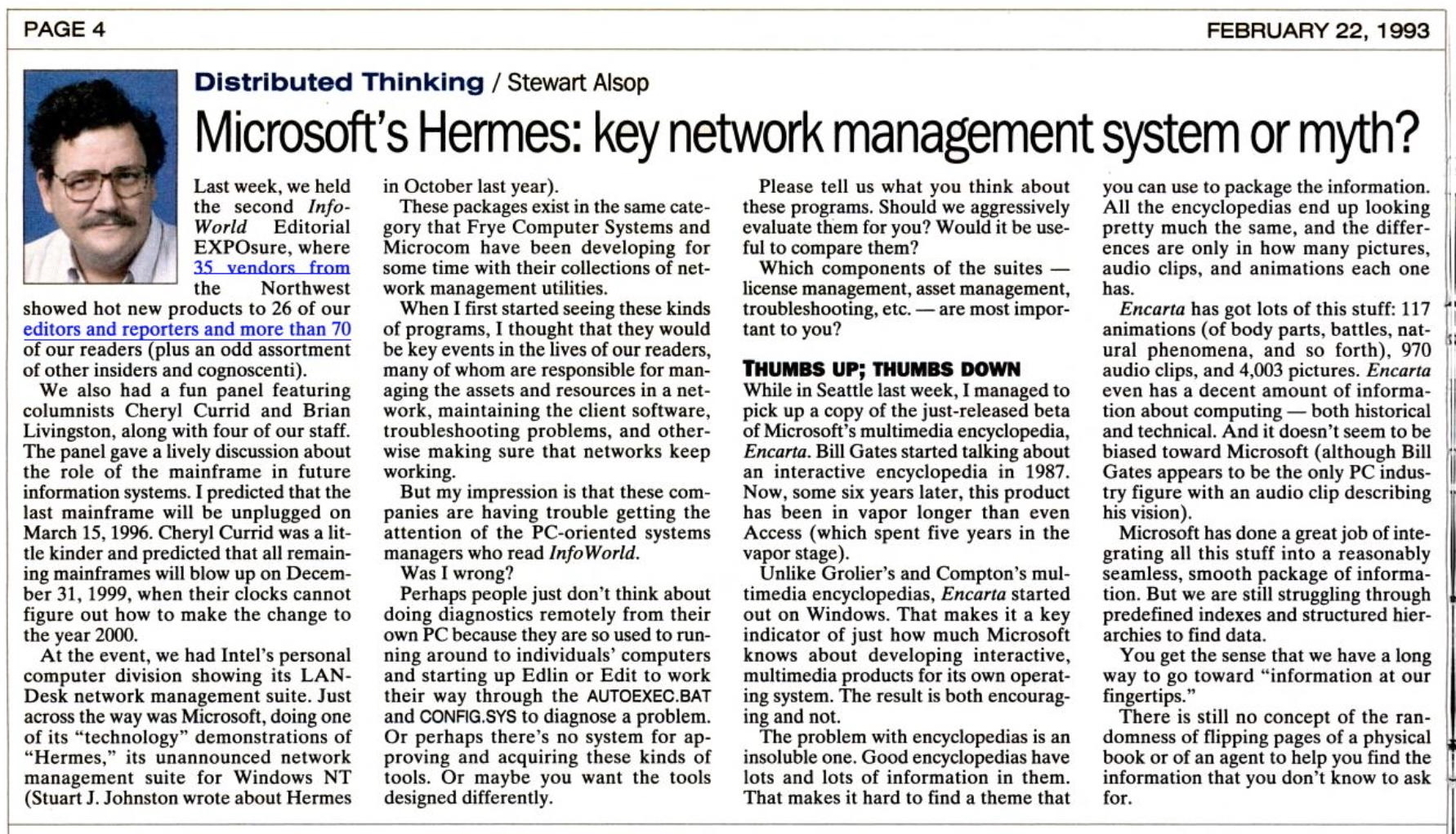
Reference for the magazine article:
Alsop, Stewart. “Microsoft’s Hermes: key network management system or myth?” Distributed Thinking, InfoWorld magazine. February 22, 1993. page 4. (article available on Google Books)
(Revised and republished March 30th, 2025)